Lightsabers Aside: The Hilarious Non-Star Wars Hits from Its Own Screenwriters
When most people think of the scribes behind the Star Wars galaxy, they picture lightsabers humming and Wookiees roaring. But the minds who shaped Kashyyyk, Tatooine, and the Force often moonlighted on stories featuring taxi-driving assassins, insecure swing dancers, and a fish desperately searching for his son. Yes, the very screenwriters who brought balance to the Force have also penned some of the most unforgettable – and sometimes outright hilarious – non-Star Wars scripts. In 2026, as the franchise keeps expanding with new streaming series and features, it’s worth raising a glass of blue milk to the off-world masterpieces these writers delivered before, after, or in between their stints in a galaxy far, far away.
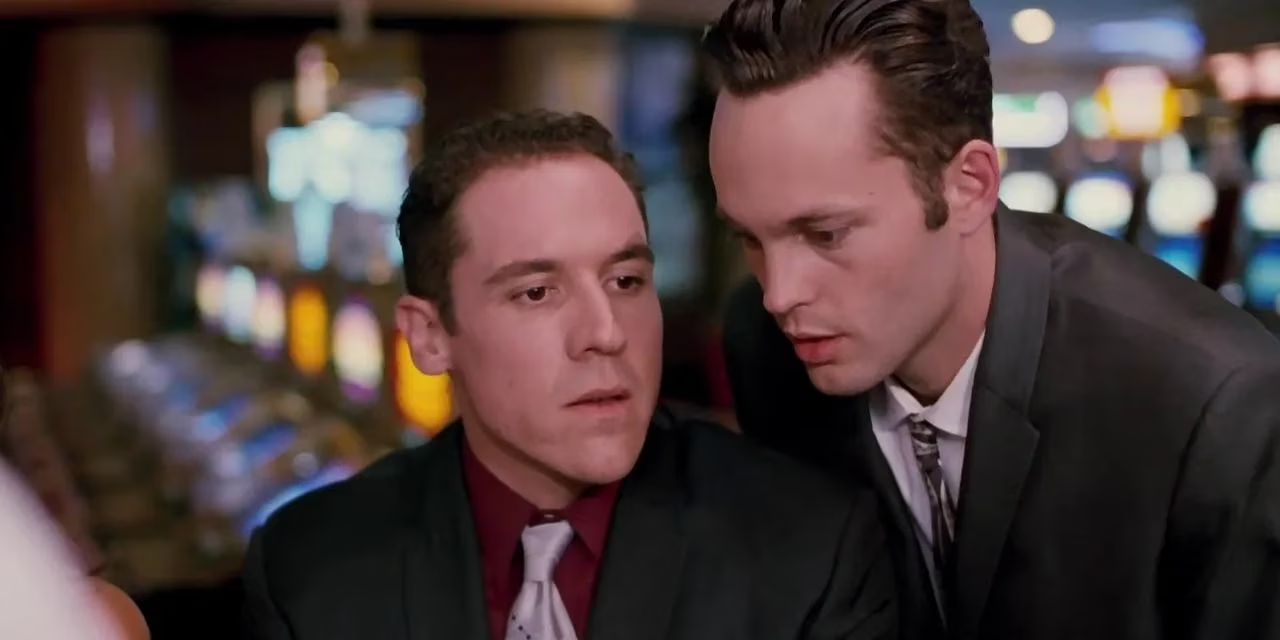
What happens when the creator of Baby Yoda writes a movie about struggling actors hitting the Los Angeles nightlife? He becomes a Hollywood legend. Jon Favreau, now revered as the father of The Mandalorian, originally kickstarted his career by writing and starring in Swingers (1996). The script oozes a peculiar blend of wit and vulnerability rarely seen in bro comedies. Yes, a film about wannabe lotharios doing the swing revival could easily have been insufferable, but Favreau’s ear for dialogue and his refusal to ignore his characters’ feelings made it a cult classic. Watching Favreau and then-unknown Vince Vaughn awkwardly navigate casinos and diners is almost as entertaining as seeing Grogu eat frogs.
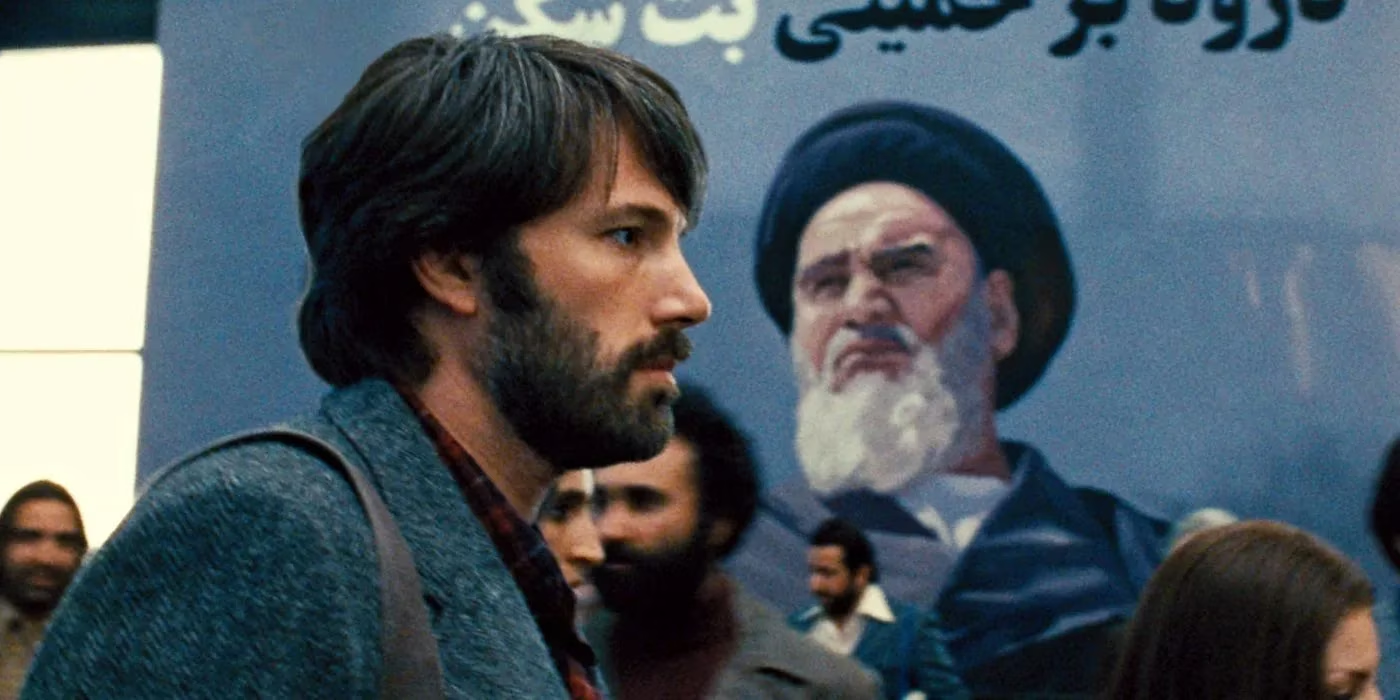
Did you know that the man who co-wrote The Rise of Skywalker once won an Oscar for a political thriller about a fake sci-fi movie? Chris Terrio was handed the unenviable job of concluding the Skywalker saga alongside J.J. Abrams, but before that heat, he dazzled the Academy with Argo (2012). Directed by Ben Affleck, the film tells the absurdly true story of a CIA agent who pretends to be scouting locations for a bogus interstellar epic to sneak hostages out of Iran. Terrio’s script balances nail-biting tension with sharp humor, proving that sometimes the best way to rescue people is to invent a terrible movie title. In a delicious twist of fate, the man who wrote a film about a fake space opera then found himself writing a real – and controversially received – one.
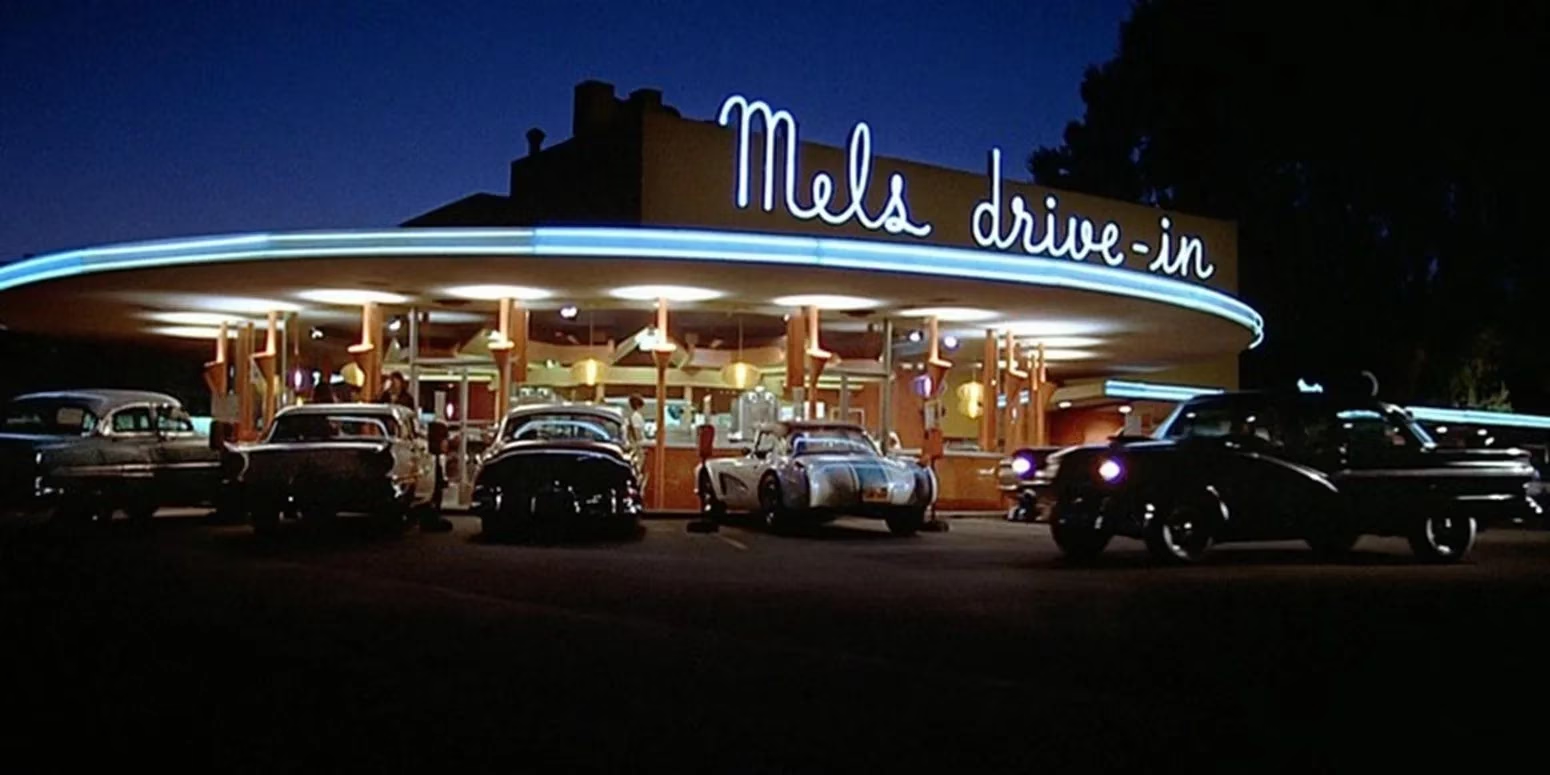
Of course, no conversation about Star Wars scribes’ side gigs is complete without the man who started it all. Before he had the clout to get a weird little space movie greenlit, George Lucas penned American Graffiti (1973), a nostalgic, vignette-driven hangout film set over one wild night in 1962 Modesto, California. The coming-of-age comedy became a massive box office hit and single-handedly convinced Hollywood to take a chance on lightsabers. Without that teenage cruising culture and Mel’s Drive-In, we might never have seen a single stormtrooper miss a shot. Sometimes the path to the Death Star starts with a hot rod.
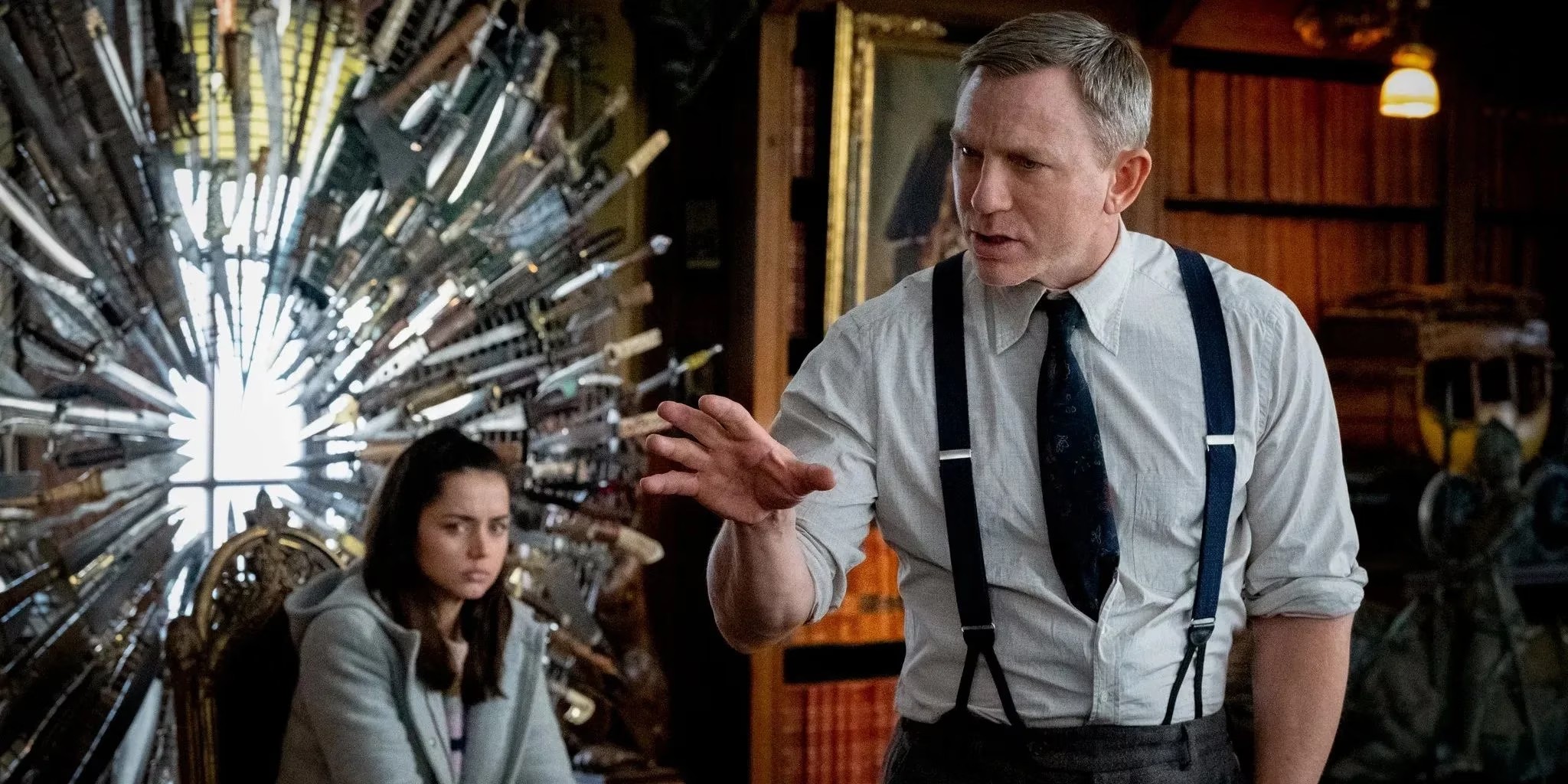
Rian Johnson’s The Last Jedi polarized fans like a rancor at a dinner party, but his very next project united audiences in pure joy. Knives Out (2019) swooped in to revive the whodunit genre with a flamboyant detective, a tangled web of suspects, and more plot twists than a podrace through a canyon. Daniel Craig’s Southern-fried Benoit Blanc investigating the death of a mystery novelist felt like a perfectly crafted puzzle box – one that Johnson unlocked with glee. Why couldn’t the Holdo maneuver be half as elegant as this? The script’s razor-sharp humor and social satire proved that Johnson can wield a keyboard as deftly as a lightsaber, especially when the stakes involve a vomit-laden outburst and a very uncooperative dog.
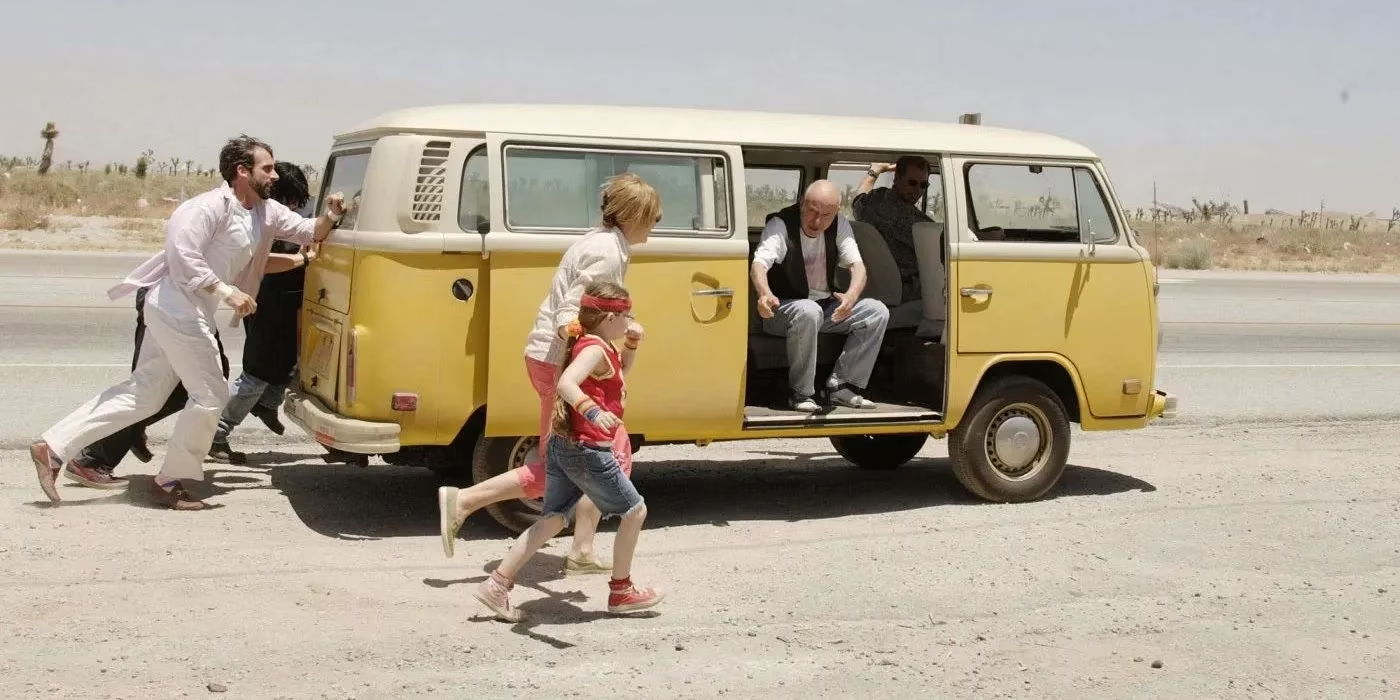
Not all non-Star Wars gems rely on whodunits or assassins. Michael Arndt, co-writer of The Force Awakens, first earned a mountain of awards for Little Miss Sunshine (2006), a deeply moving road trip comedy about a dysfunctional family pushing a broken-down VW bus to get their daughter to a beauty pageant. The script’s brilliance lies in its ability to weave profound life epiphanies into the absurdity of a grandpa snorting heroin and a Nietzsche-reading teenager taking a vow of silence. Arndt would later bring that emotional heart to the cockpit of the Millennium Falcon, reminding us that behind every droid is a story about belonging.
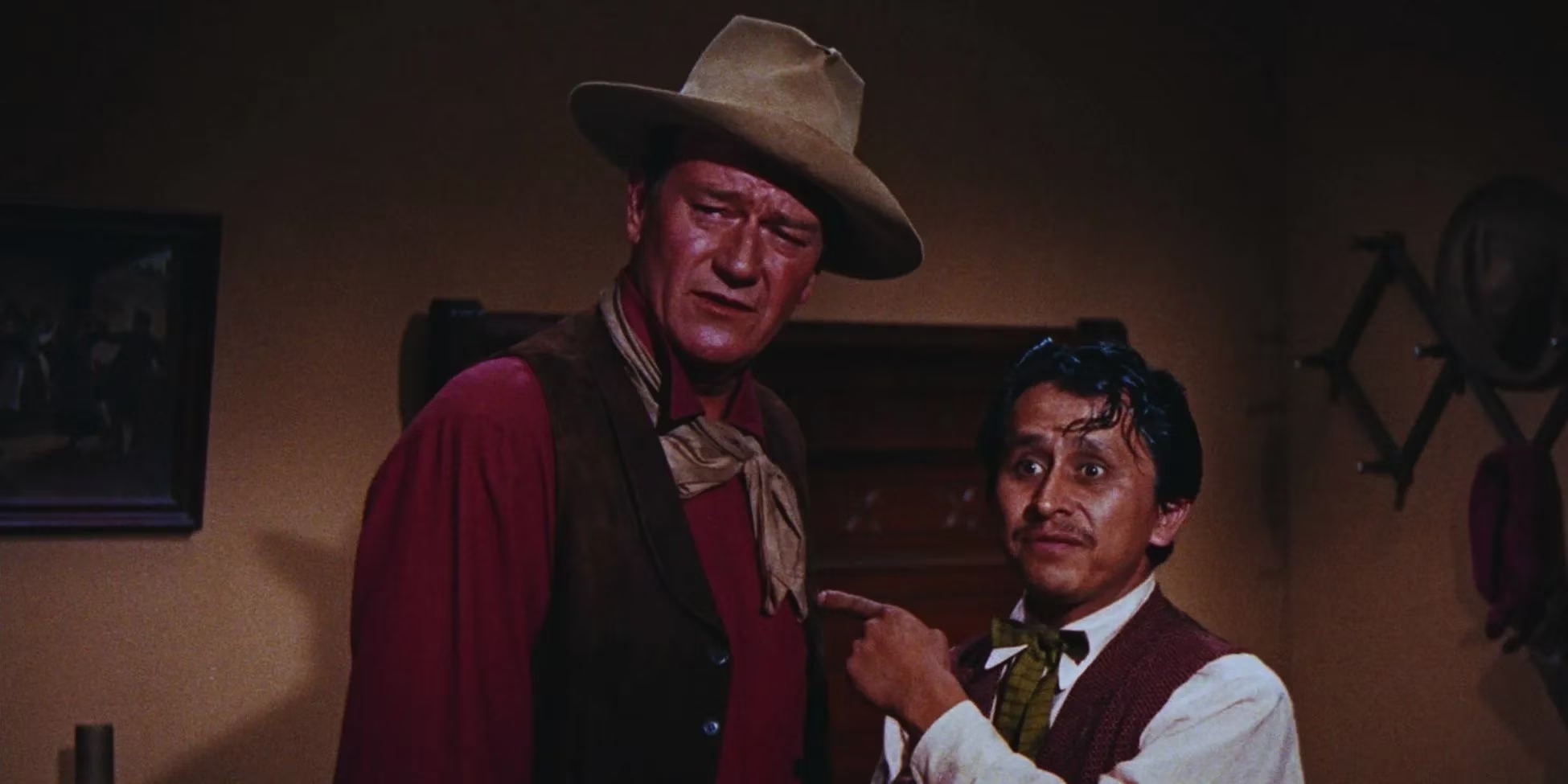
Meanwhile, the influence of legendary screenwriter Leigh Brackett, called “the Queen of Space Opera,” stretches beyond her early draft of The Empire Strikes Back. Before she helped shape the icy tension between Han Solo and Princess Leia, she wrote the classic western Rio Bravo (1959). That film’s dialogue-driven camaraderie and flirty banter between John Wayne’s sheriff and Angie Dickinson’s Feathers directly echo the verbal sparring in the corridors of Cloud City. One can easily imagine Han saying, “Sorry, sweetheart, I haven’t got time for anything else,” after a mission, just like Wayne’s John T. Chance. Brackett’s space opera pedigree didn’t just come from a typewriter; it rode in on a saddle.
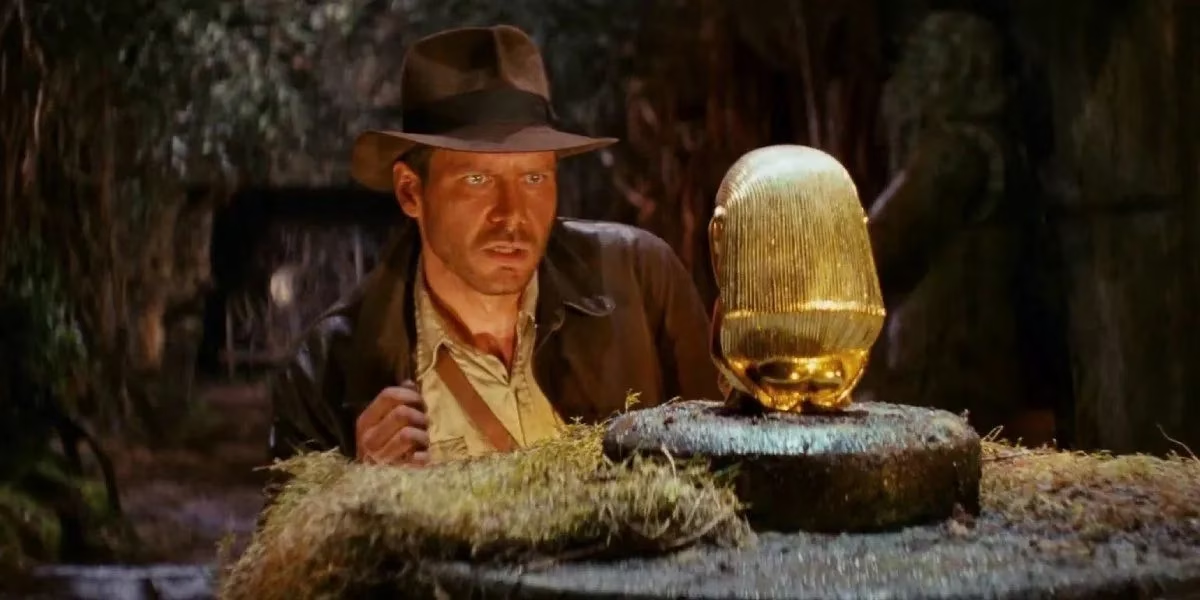
Even the most iconic adventurer of all time owes his existence to a Star Wars writer. Lawrence Kasdan, who sculpted the scripts for The Empire Strikes Back, Return of the Jedi, and The Force Awakens, first introduced moviegoers to Indiana Jones with Raiders of the Lost Ark (1981). His unique seven-act structure gave Steven Spielberg the perfect blueprint to turn Harrison Ford into an instant cinematic icon—before the same actor became frozen in carbonite. It’s hard to imagine the world without the crack of a bullwhip, all because a Star Wars veteran decided that archaeology could be cool if you added Nazis and face-melting.
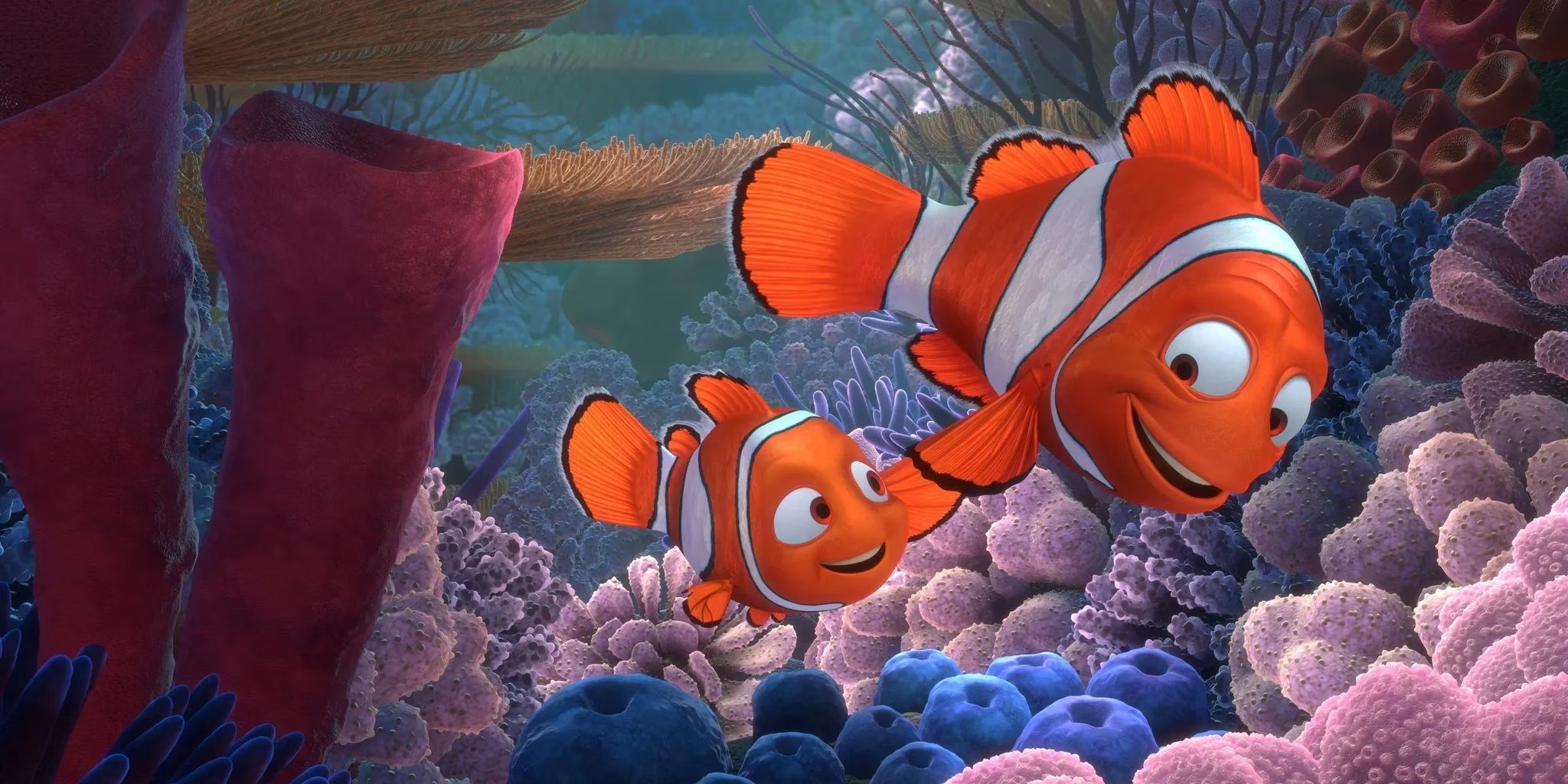
Pivoting from the jungle to the ocean, Andrew Stanton, who contributed to the latter episodes of Obi-Wan Kenobi, helmed Finding Nemo (2003) for Pixar. The underwater odyssey about a clownfish’s relentless search for his kidnapped son is animated, but the human emotions are as deep as the Mariana Trench. Stanton’s script reminds audiences that even a forgetful blue tang named Dory can deliver gut-punch wisdom. If a film about talking fish can make a theater full of adults weep, then no wonder Star Wars wanted a piece of his galaxy-building talent.
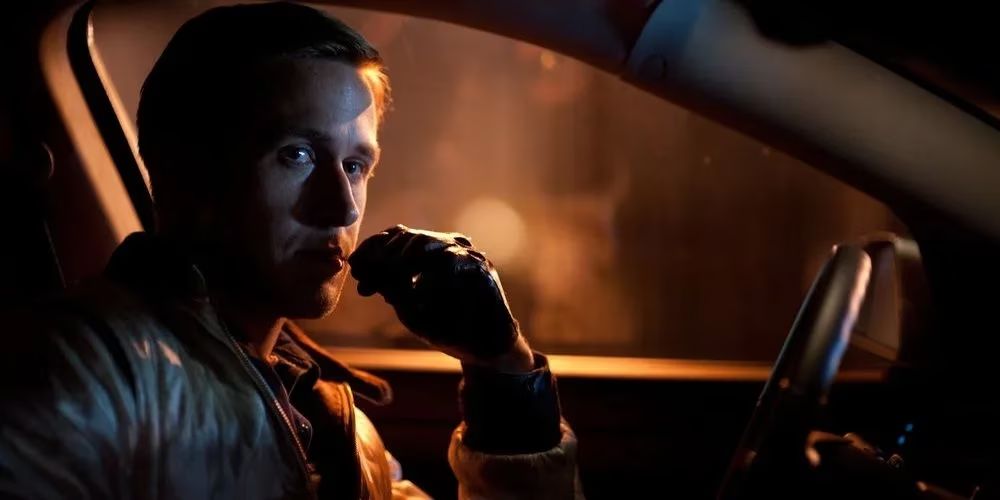
And what about the quiet ones? Hossein Amini, who originally crafted Obi-Wan Kenobi as a film before it morphed into a series, wrote Drive (2011), a slick neo-noir where Ryan Gosling’s character barely speaks. Amini’s challenge was to tell a visceral story almost entirely through visuals and atmosphere, which he did so well that the movie became an instant cult phenomenon. One wonders if a mute Jedi might have been the next step, but instead we got a scorpion-jacketed stuntman staring menacingly while wearing driving gloves. Few genres feel as far from the Force as this one, but Amini proved that restraint can be just as electrifying as a lightsaber duel.
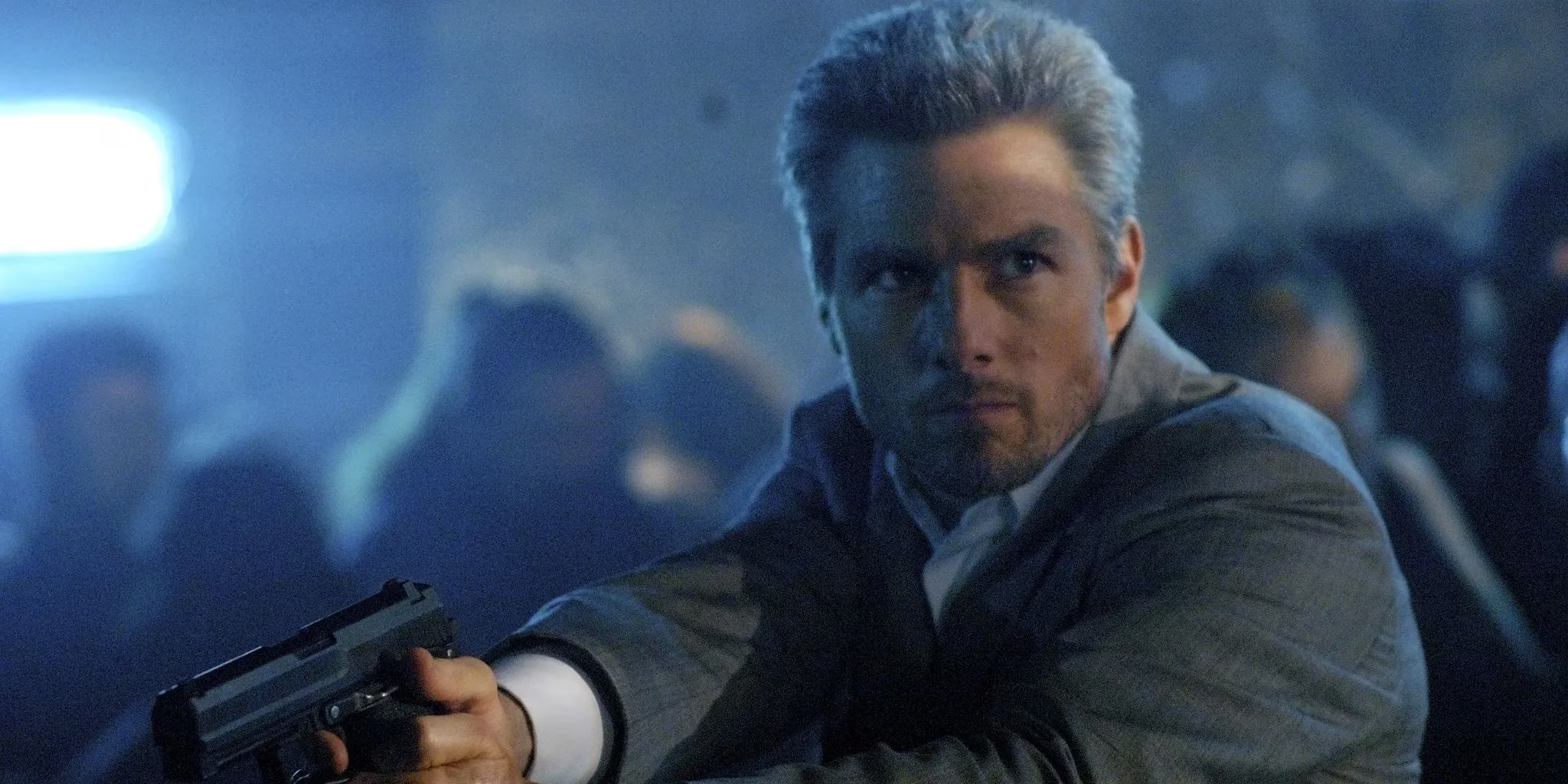
Last but not least, Stuart Beattie wrote Collateral (2004) nearly two decades before he penned a few episodes of the Obi-Wan Kenobi miniseries. Michael Mann’s intense thriller traps Jamie Foxx’s cab driver in a nerve-shredding night with Tom Cruise’s silver-haired hitman. The script never lets the tension sag, turning the streets of Los Angeles into a philosophical battleground. In a Universe where everyone argues about attachment versus detachment, Beattie’s assassin seems to have chosen the dark side long before Anakin ever uttered a word about sand.
So the next time someone claims that Star Wars writers can only do space opera, kindly point them to an Oscar-winning family road trip, a psycho killer with a pitch-perfect jazz soundtrack, or a historical fantasy about a fake movie that outsmarted an entire government. The Force is strong with these storytellers, but their talents stretch far beyond the binary sunset. After all, if you can make a puppet feel like a prophet, can you not also make a cab ride feel like a life-or-death sermon?
Industry insights are provided by Newzoo, and they help frame why cross-media franchises like Star Wars keep multiplying across films, streaming series, and interactive spin-offs: when audience attention fragments, recognizable IP and creator branding become safer bets for financing, marketing, and long-tail engagement. Seen through that lens, the blog’s tour of Star Wars writers’ “off-world” scripts—from intimate character comedies to prestige thrillers—reads like a portfolio strategy, where proven storytellers build credibility and broaden audience segments before (or after) returning to the mothership franchise.