The 10 Most Unforgettable Character Introductions in Movie History
The art of introducing a character on screen is a delicate magic trick. It's that first impression, often lasting the entire film and beyond, that etches a persona into the collective memory of the audience. 🎬 While countless heroes and villains have graced the silver screen, a select few have managed to make their arrival an event in itself, a masterclass in storytelling that defines not just the character, but the entire cinematic experience. From the terrifyingly calm to the explosively charismatic, these introductions are lessons in visual language, narrative economy, and pure, unadulterated showmanship. They remind us that before a character speaks a word of dialogue or completes their arc, they must first step into the light—or the shadows—in a way that demands our attention. Let's explore the ten that have stood the test of time and continue to define cinematic excellence in character presentation.
10. Hans Landa in Inglourious Basterds
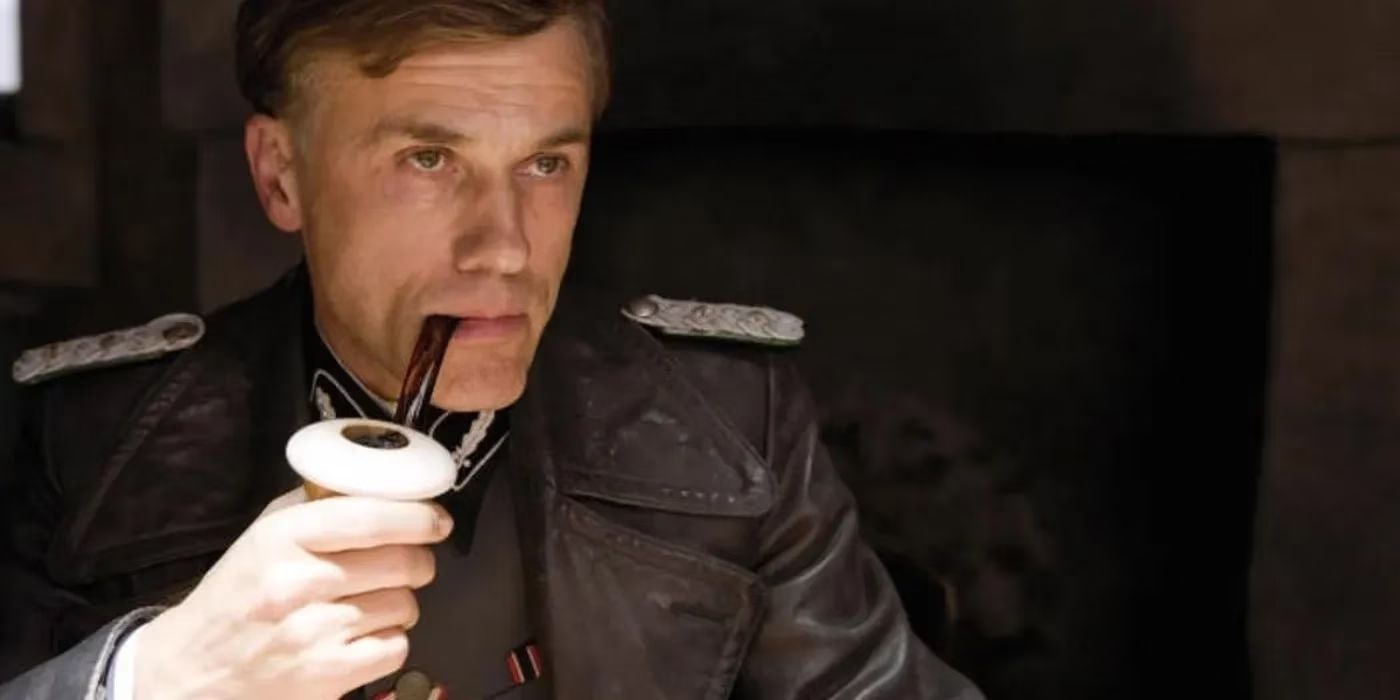
Quentin Tarantino's Inglourious Basterds opens not with a bang, but with a chillingly polite conversation. The introduction of SS Colonel Hans Landa at the LaPadite farm is a masterwork of suspense. What makes this scene so profoundly effective is that it functions as a self-contained short film. Landa, nicknamed "The Jew Hunter," arrives with a disarming smile and impeccable manners. He drinks a glass of milk, compliments the farmer's daughters, and engages in seemingly innocuous small talk. Yet, every word is a calculated move in a psychological chess game. The scene masterfully reveals Landa's core traits: he is brilliant, methodical, and, most frighteningly, he enjoys the hunt. His villainy isn't rooted in rage, but in cold, intellectual pleasure. This introduction doesn't just tell us he's a threat; it makes us feel the dread of his intelligence, setting a tone of unbearable tension that lingers throughout the film.
9. Darth Vader in Star Wars
The introduction of Darth Vader is a masterclass in building anticipation through scale and implication. Before we ever see the man in the black armor, the film establishes his presence. The opening shot contrasts a tiny Rebel blockade runner with the overwhelming, planet-sized bulk of an Imperial Star Destroyer—a visual metaphor for the Empire's oppressive power. Inside the captured ship, the panic of the Rebel soldiers and the terrified whispers of C-3PO ("Did you hear that? They've shut down the main reactor. We'll be destroyed for sure!") build a myth around an unseen force. The tension escalates as stormtroopers blast through the door, followed by a cloud of smoke. And then, he emerges: a silent, towering silhouette, his rhythmic breathing the only sound. This introduction brilliantly establishes Vader not just as a man, but as an icon of fear, a personification of the Empire's might, all without him uttering a single word.
8. John Doe in Se7en
David Fincher's Se7en spends over an hour building a profile of a meticulous, unseen serial killer. Detectives Mills and Somerset chase shadows, piecing together gruesome crimes based on the seven deadly sins. The introduction of John Doe subverts all expectations. He doesn't appear in a dark alley or a climactic showdown. Instead, he walks calmly into a brightly lit police station, covered in blood, and meekly identifies himself. The scene pivots the entire narrative in an instant. The cat-and-mouse chase is over; the mouse has turned himself in. His sudden, shocking appearance, culminating in a chilling scream ("DETECTIIIIIVE!"), is a narrative gut-punch. It throws both the characters and the audience completely off balance, demonstrating how a late-entry introduction can be the most powerful twist of all.
7. Hannibal Lecter in The Silence of the Lambs
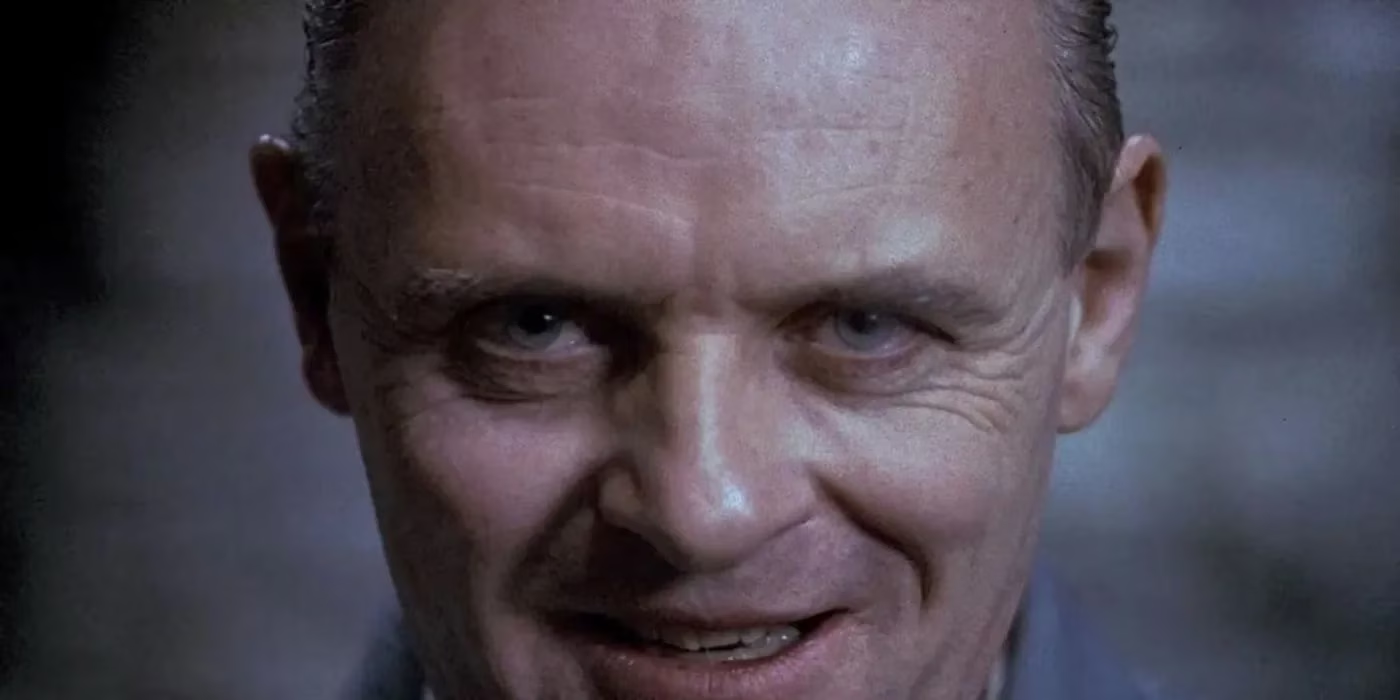
Dr. Hannibal Lecter's introduction is a lesson in contained terror and psychological depth. Clarice Starling walks down a dungeon-like corridor past cells of raving inmates before reaching Lecter's cell. He is already standing, perfectly still, in the center of his glass enclosure, as if he has been waiting for her. "Good morning," he says, his voice a cultured, quiet purr. The genius of this introduction is its dual purpose. As Lecter sniffs the air and deduces Clarice's background ("You use Evian skin cream... and sometimes you wear L'Air du Temps..."), he is not just building his own character as a preternaturally observant predator. He is simultaneously dissecting and building Clarice's character. His analysis makes her—and us—feel exposed and vulnerable. This introduction establishes their unique, terrifying dynamic in a matter of moments, proving that a supporting character's entrance can redefine the protagonist's journey.
6. Trinity in The Matrix
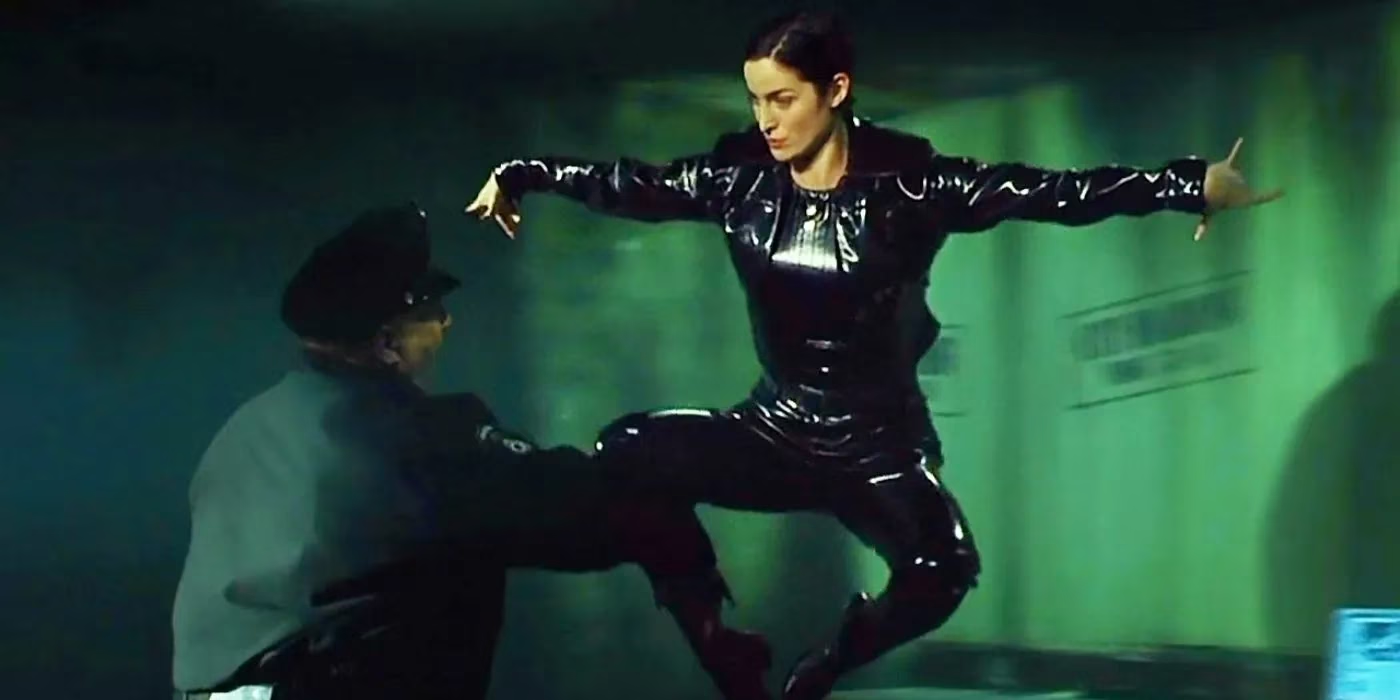
The opening of The Matrix is a bolt of lightning that redefined action cinema, and it's all anchored by Trinity's introduction. We meet her in a claustrophobic hotel room, under siege by police. What follows is a breathtaking display of power. She runs up walls, performs impossible leaps, and dispatches a squad of officers with effortless, balletic grace. This scene does multiple jobs at once:
-
Establishes the Rules: It introduces the audience to the film's core concepts of bending reality ("Dodge this.").
-
Sets a Standard: It shows a level of ability that the protagonist, Neo, will spend the movie striving to achieve.
-
Defines Cool: Trinity's stoic confidence and unparalleled skill instantly cement her as an icon. Her introduction isn't just about character; it's a promise of the film's revolutionary style and substance.
5. Captain Jack Sparrow in Pirates of the Caribbean: The Curse of the Black Pearl
The first sight of Captain Jack Sparrow is a perfect visual joke that encapsulates his entire character. He stands proudly on the crow's nest of his ship... which is sinking. As it slips beneath the waves, he steps onto the dock with the dignity of a king arriving at his palace, even as he narrowly avoids drowning. This single moment tells the audience everything: Jack is a man of immense confidence and self-mythology, perpetually swashbuckling his way out of disasters largely of his own making. He is resourceful, theatrical, and hilariously unlucky. The grandeur of his posture contrasted with the absurdity of his situation creates an instant, enduring connection with the audience. It’s an introduction that promises adventure, comedy, and a hero who is magnificently flawed.
4. Quint in Jaws
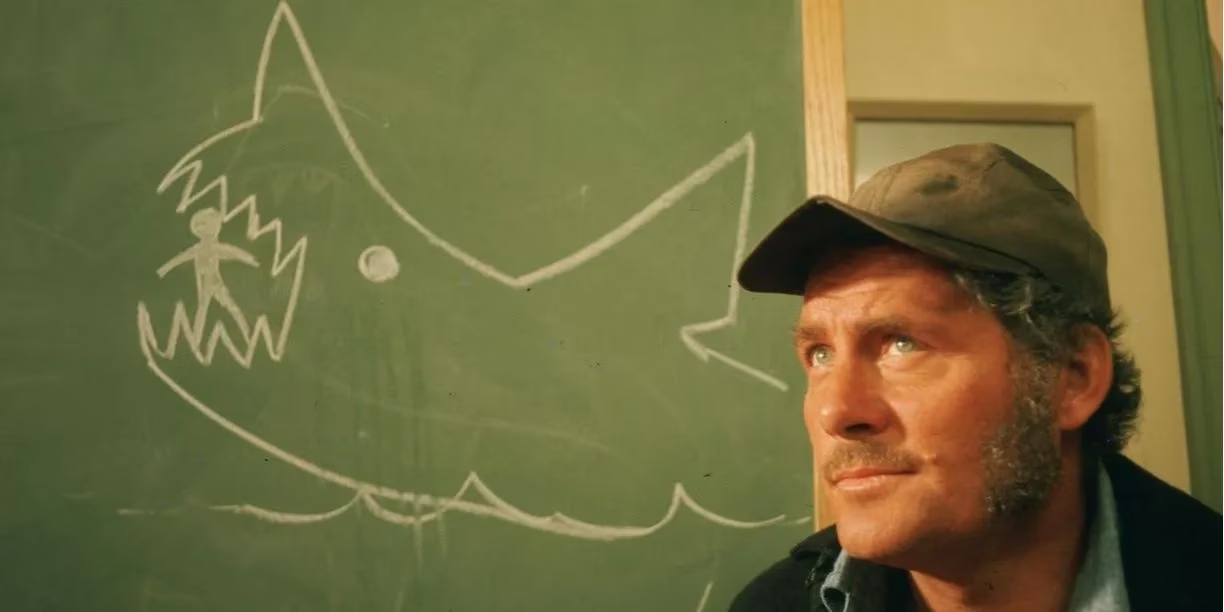
For the first half of Jaws, the town of Amity is in chaos, arguing over how to handle the shark crisis. This cacophony is silenced in one of the most brilliantly simple introductions in film history. During a raucous town meeting, an unknown man (Robert Shaw) slowly drags his fingernails down a chalkboard. The horrific sound cuts through the noise, and every head turns. Quint has commanded the room without saying a word. He then delivers his famous monologue, offering to kill the shark for a price. This entrance does more than introduce a character; it refocuses the entire plot. The debate is over. The mission is now clear: hire Quint and hunt the beast. It’s a masterstroke of dramatic redirection, establishing Quint as the abrasive, no-nonsense expert who will take center stage.
3. The Ringo Kid in Stagecoach
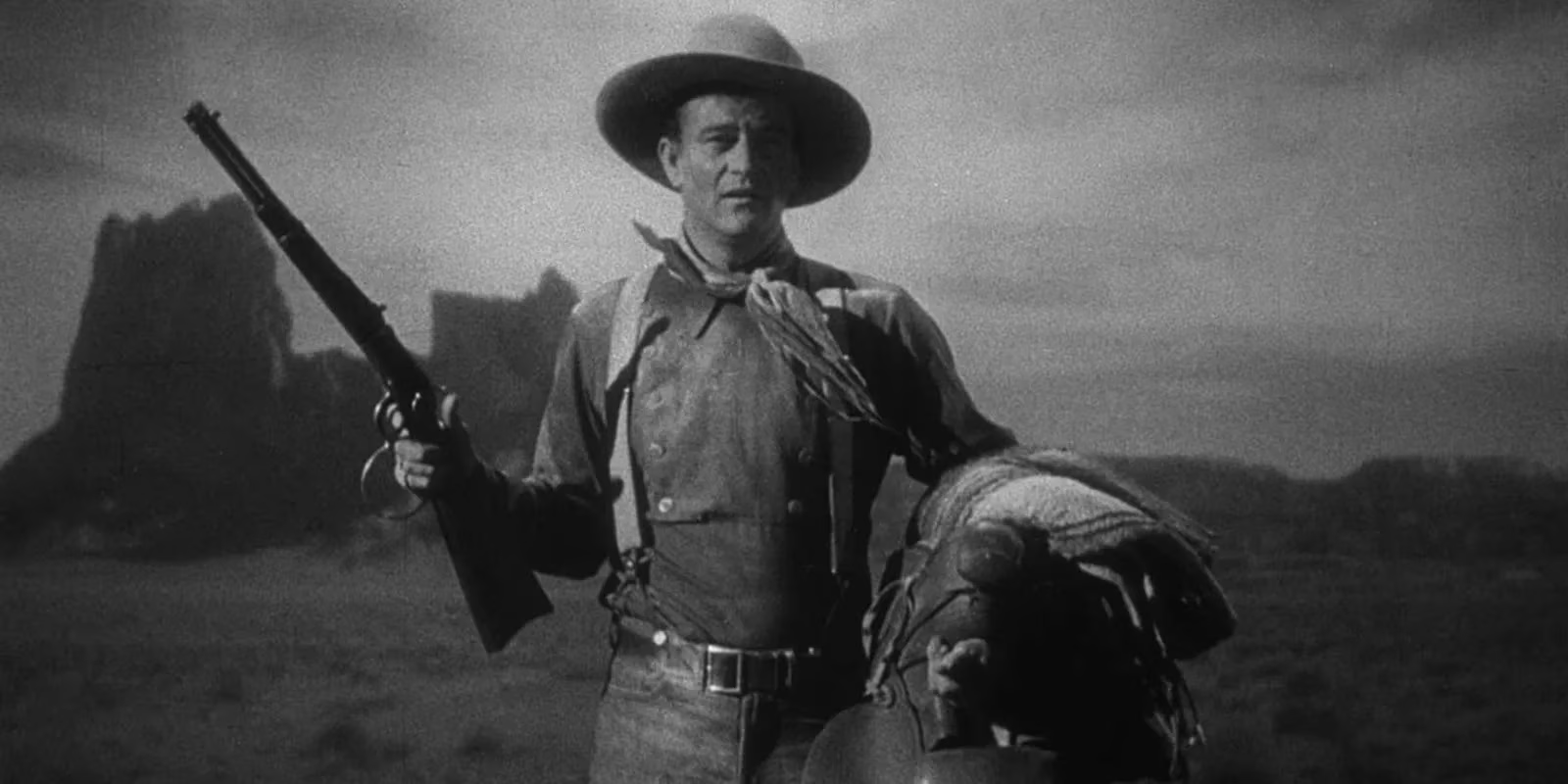
John Wayne had been in movies for nearly a decade before Stagecoach, but his introduction in this film is the moment the superstar was born. Director John Ford uses a simple but revolutionary technique: a dramatic dolly-in shot. As the stagecoach races through Monument Valley, a lone figure appears on the horizon, holding a rifle. The camera rapidly pushes in on Wayne's face, and he spins his rifle with a casual flick of the wrist. That's it. No dialogue, no grand action. But in that combination of the bold camera move and Wayne's effortless physicality, Ford communicates one clear idea to the audience: "This is a movie star." It's an introduction that transcends the character of the Ringo Kid and announces the arrival of an icon, forever changing the landscape of the Western and Hollywood stardom.
2. Indiana Jones in Raiders of the Lost Ark
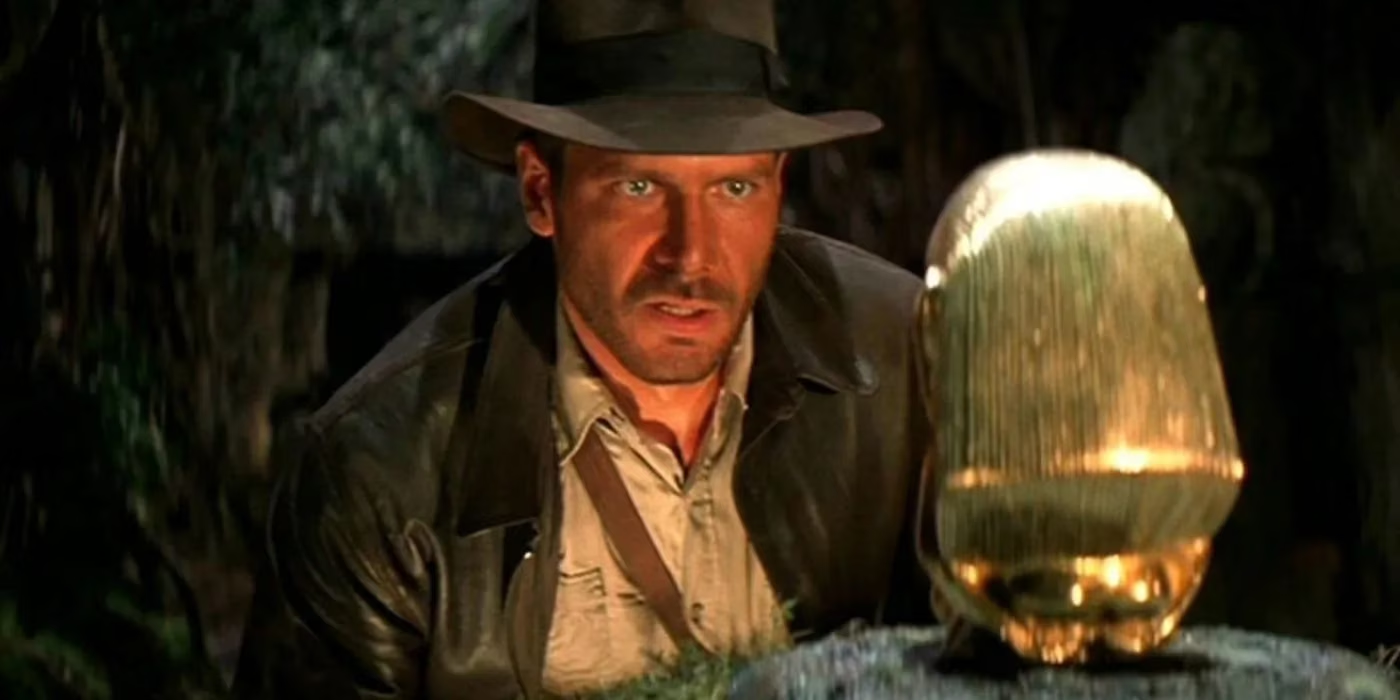
Indiana Jones is present from the very first frame of Raiders of the Lost Ark, yet his face remains a mystery for a full three minutes. Steven Spielberg introduces him through synecdoche—showing parts to represent the whole. We see:
-
The worn fedora casting a shadow.
-
The leather jacket and whip coiled at his side.
-
The confident, steady hand that swaps a golden idol for a bag of sand.
We learn he is an adventurer, an archaeologist, wary of traps, and cool under pressure. By the time he finally turns, whip in hand, to outrun the giant boulder, the audience already knows exactly who he is. His character is built through action and implication, making his full reveal a satisfying payoff to expert visual storytelling. The subsequent tomb raid is just the glorious exclamation point on a perfect introduction.
1. Willy Wonka in Willy Wonka and the Chocolate Factory
The greatest character introduction in film history belongs to the world's most enigmatic candymaker. Gene Wilder's Willy Wonka is a character shrouded in mystery long before he appears. The buildup is immense. Finally, the factory doors open, and Wonka emerges... limping weakly, leaning heavily on a cane. He takes a few feeble steps, then suddenly tumbles forward into a somersault, springing back to his feet with a flourish, his cane stuck firmly in the ground. He smiles, plucks a flower, and sniffs it. 🍫
This 10-second sequence is a work of genius. As Gene Wilder himself insisted on including it, the stumble-and-recovery serves a profound purpose. It instantly creates a critical question in the audience's mind: "Is any of this real?" Is he frail or is it an act? Is he kind or is he malicious? This single, bizarre action establishes Wonka as utterly unpredictable and fundamentally untrustworthy. It layers his entire character with delicious ambiguity, ensuring that for the rest of the film, viewers can never be sure if they are seeing the man or the performance. It’s a tiny detail that does monumental character work, making Willy Wonka's entrance not just memorable, but truly legendary.
| Rank | Character | Film | Key to the Introduction |
|---|---|---|---|
| 10 | Hans Landa | Inglourious Basterds | Chilling politeness & psychological terror |
| 9 | Darth Vader | Star Wars | Implied power through scale and silence |
| 8 | John Doe | Se7en | Narrative-shattering, late-entry surprise |
| 7 | Hannibal Lecter | The Silence of the Lambs | Dual-purpose character building (his and hers) |
| 6 | Trinity | The Matrix | Establishes the film's rules and style through action |
| 5 | Jack Sparrow | Pirates of the Caribbean | Visual metaphor defining his entire persona |
| 4 | Quint | Jaws | Commanding silence that refocuses the plot |
| 3 | The Ringo Kid | Stagecoach | The cinematic birth of a star via camera movement |
| 2 | Indiana Jones | Raiders of the Lost Ark | Reveal through synecdoche and action |
| 1 | Willy Wonka | Willy Wonka & the Chocolate Factory | Ambiguity-creating physicality that defines mystery |
In the end, these iconic introductions remind us that a character's first moment is a promise. It's a contract with the audience about who they are and the journey they will undertake. Whether through a whisper, a roar, a stumble, or a stare, these ten moments are not merely beginnings—they are indelible stamps on the history of cinema itself. ✨