The Great Coat-and-Hat Caper: How Spielberg’s Movie Magic Duped Millions
The year is 2026, and the cinematic sorcery of Steven Spielberg still has jaws dropping across the globe. Decades after the fact, a single, jaw-dropping frame from Raiders of the Lost Ark continues to prove that the man behind the camera was less a director and more a conjurer of sublime illusions. Picture this: a sun-scorched desert chase, Nazis foaming with rage, and the Ark of the Covenant making its grand escape. In the heat of all that chaos, one villain figure stands tall—well, crouches, actually—and nobody noticed. That’s not hyperbole. That’s the power of a hat, a coat, and the audacity of a master filmmaker.
The tale begins, as all great Hollywood legends do, on a beach. There, a young Spielberg confessed to his pal George Lucas that he’d love to helm a James Bond flick. Lucas, that sly old storyteller, grinned and said he had something even better—a rough outline for an archaeologist-adventurer who would eventually swagger into history as Indiana Jones. After a casting rollercoaster that nearly handed the whip to Magnum P.I.'s Tom Selleck, Harrison Ford snatched the fedora, and the rest is celluloid scripture.
What followed was a shoot so punishing it could break lesser mortals. In Tunisia, the cast battled dysentery like it was a final boss; Ford, famously, traded an elaborate sword fight for a single, exasperated gunshot because his stomach was staging a rebellion. But that was just the appetizer. The main course of madness involved a certain Nazi villain named Major Arnold Toht, played by the ever-committed Ronald Lacey. Now, Lacey was a man whose body loved drama off-screen as much as on—weight fluctuations, bouts of illness, the works. Under the merciless North African sun, his constitution finally waved a white flag, leaving Spielberg with a gaping hole in a crucial scene: Toht was supposed to be fuming alongside René Belloq as Indiana Jones made off with the Ark. No Lacey, no Toht, no time.
And here’s where the movie magic—call it cinematic sleight-of-hand—really strutted its stuff. Spielberg, with the devil-may-care grin of a man who knows he’s about to get away with murder, turned to stunt coordinator Peter Diamond.
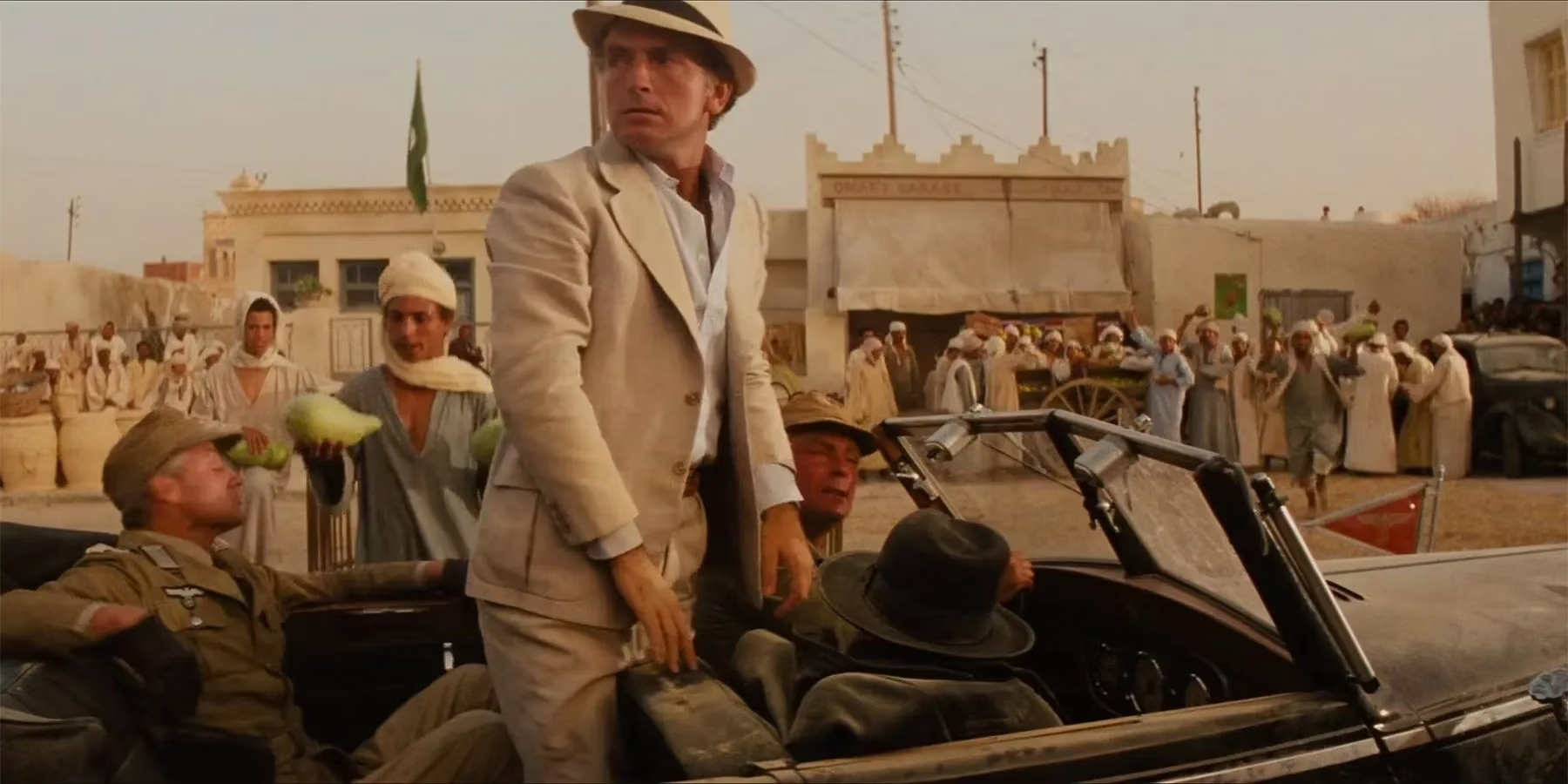
“Peter,” you can almost hear him say, “crouch down, put on Toht’s coat, pop on that menacing hat, and keep your face hidden. The audience won’t see a thing. They’ll be too busy screaming at that truck chase.”
Boom. Just like that, a legendary illusion was born. Diamond—who had already doubled for everything from Doctor Who monsters to Star Wars denizens—folded his frame and became a silhouette. Not the actor, not even a stand-in in the traditional sense, but a living, breathing suggestion of Toht. The hat and coat did the talking, strutting around with the arrogant posture of a villain who had no idea he was actually a crouching stuntman trying not to sneeze. It was wardrobe improvisation elevated to high art. You look at that scene even today and your brain simply fills in the face, because Spielberg had already carved Toht’s oily menace into your subconscious. Your eyes saw a coat and a hat; your memory screamed “Toht!” and your pulse did the rest.
And oh, how it worked! For years, audiences devoured that finale—the roaring trucks, the galloping horses, the soaring John Williams score—and never once caught the trick. Home video releases eventually let eagle-eyed fans rewind and gasp. “Wait a second… is that just clothes?!” Yes, dear viewer, it absolutely was. Clothes that performed better than many actors with full lines. If the Academy had a category for Best Supporting Garment, Toht’s ensemble would have taken home the gold.
The sheer cheek of the move has become a beloved footnote in film history, a reminder that the greatest directors don’t just control what you see, they control what you think you see. Spielberg weaponized adrenaline, using the momentum of the chase to blind his audience to technical necessity. He turned a crisis into a classic example of problem-solving panache. In an era long before deepfakes and digital face-swapping, a hat and a coat held the line—proving that sometimes the most powerful special effect is the one that doesn’t exist.
Fast-forward to 2026, and the Indiana Jones saga has long since ridden into the sunset with 2023’s Dial of Destiny closing Ford’s chapter for good. Yet the series’ DNA remains soaked in this kind of scrappy, genius-level filmmaking. New generations discover Raiders on streaming platforms like Paramount Plus and inevitably freeze that desert scene, mouths agape, as they realize a piece of outerwear just gamed them.
The stuntman’s own son, years after the fact, proudly confirmed that it was indeed his father, Peter Diamond, hiding in plain sight. A reveal that only deepens the myth. Because let’s be honest—legends deserve their fun little secrets. And what’s more legendary than a movie monster made of wool and felt, crouching its way into cinema immortality?