Harrison Ford's Emotional Indiana Jones 5 Reunion with Karen Allen
In a stunning cinematic moment that left audiences both cheering and wiping away tears, Harrison Ford's legendary archaeologist Indiana Jones found his way back to the one person who truly understood him—Karen Allen's fiery Marion Ravenwood. The year is 2026, and the final installment of the franchise, Indiana Jones and the Dial of Destiny, has cemented its place in film history not just with globetrotting adventure, but with a profoundly human conclusion that brought the iconic couple full circle. Director James Mangold masterfully orchestrated a farewell tour that was less about ancient artifacts and more about mending a broken heart, culminating in a scene so powerful it felt like a direct transmission from 1981.
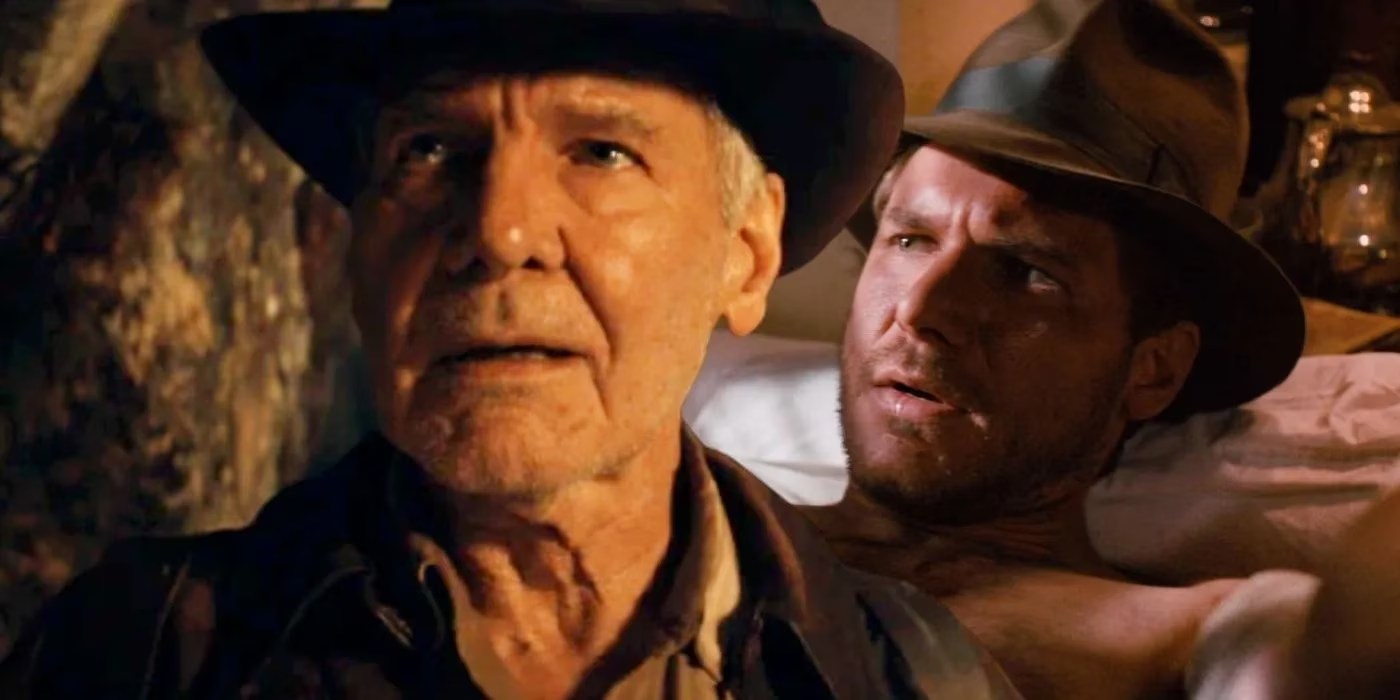
When audiences reconnected with Dr. Jones in 1969, the hero they remembered was gone, replaced by a grizzled, lonely man shouting at kids to turn down their rock 'n' roll. His apartment was a museum of regrets, and his greatest loss wasn't a relic—it was his family. The film reveals the devastating truth: Indy and Marion's marriage shattered after the death of their son, Mutt, in the Vietnam War. This wasn't the swashbuckling professor of yore; this was a man drowning in guilt, believing his greatest adventure had ended in ultimate failure. The entire third act, with its mind-bending leap 2000 years into the past, becomes a metaphor for Indy's own desire to escape his painful present.
Mangold's Masterstroke: The Marion Gambit
In a recent interview, Mangold revealed the genesis of the film's emotional core. The idea to bring Marion back for the finale was, in his words, "pretty brilliant" and came from writers Jez and John Henry Butterworth early in the process. They shot Karen Allen's scenes remarkably early in production—just two days' work in the second or third month. Yet, the impact was seismic. "She landed and just dropped in," Mangold recalled, "and the chemistry between her and Harrison was, of course, immediate. It's something they had developed over many years." This wasn't acting; this was two old friends picking up a conversation they'd started decades ago on the set of Raiders of the Lost Ark. The power of that history infused every second of their screen time.
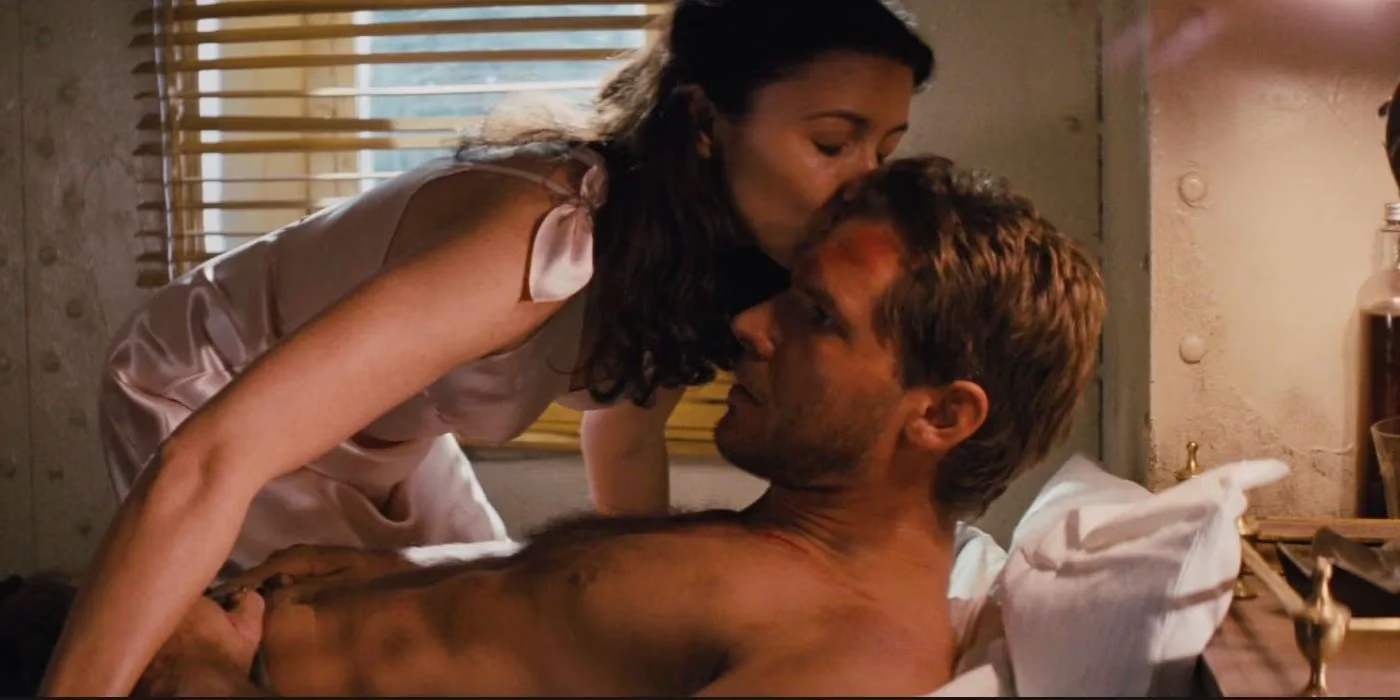
Why does this ending resonate so deeply? Because it's not just fan service—it's narrative poetry. Indy's arc in Dial of Destiny is a journey toward accepting grief, not conquering it. He finds a new, chaotic family in the brilliant and frustrating Helena (a scene-stealing Phoebe Waller-Bridge), but that only prepares him for the true challenge: facing Marion. The film posits that his greatest treasure was never the Ark or the Holy Grail; it was the love he walked away from and must now fight to regain. The callback to the iconic "where doesn't it hurt?" scene from Raiders is a stroke of genius. In the original, it was a flirtatious, playful moment after a brawl. In 2026's finale, the same line is layered with a lifetime of shared pain, loss, and silent understanding. It acknowledges all the years between then and now, all the hurt, and offers a simple, profound question as a bridge to start healing.
-
The Weight of History: Both characters carry the scars of their son's death, but the scene shows they don't need to articulate it. Their history does the talking.
-
A Full Circle Moment: From the drunken bar in Nepal to a quiet New York apartment, their journey concludes not with a bang, but with a whispered promise of a second chance.
-
A Sendoff That Earns Its Tears: This isn't a cheap emotional ploy. The entire film builds to this reconciliation, making Indy's decision to stay in his own time—and fight for his marriage—his bravest adventure yet.
Karen Allen herself reflected on the scene, calling it "lovely" and noting that its brief duration belied its immense emotional scope. It was a moment that encapsulated grief, hope, forgiveness, and the stubborn, enduring nature of a love that survived globe-trotting chaos, supernatural threats, and profound personal tragedy. In the end, Indiana Jones and the Dial of Destiny gave its hero the one thing he could never find on a map: peace. And it gave audiences a final, perfect image of Indiana Jones not as a relic, but as a man finally coming home.
| Element | 1981's Raiders of the Lost Ark | 2026's Dial of Destiny |
|---|---|---|
| Indy & Marion's Relationship | 🔥 Combustible, new romance | 💔 Weathered, fractured by loss |
| The "Where doesn't it hurt?" Context | After a bar fight; playful & flirtatious | After a temporal odyssey; heavy with grief & hope |
| Indy's Primary Quest | To find the Ark before the Nazis | To find himself and mend his family |
| The Final Reward | The Ark secured in a warehouse | Marion's hand in his, and a future together |
Ultimately, the film's legacy is secured by this choice. It dared to prioritize heart over artifact, concluding that the most important discovery an explorer can make is the path back to the people they love. The dial's destiny, it turns out, was always to point Indy toward home. 🏠✨