Rewatching Raiders of the Lost Ark in 2026: 8 Harsh Realities That Haven't Aged Well
You know, I decided to dust off my old fedora and revisit a true classic recently—Raiders of the Lost Ark. It's been over 45 years since Indy first cracked his whip on screen, and wow, let me tell you, the experience in 2026 is… different. Don't get me wrong, the thrill, the adventure, the iconic score—it's all still there, pumping pure nostalgia into my veins. But sitting down for a modern rewatch with my 2026 brain fully engaged? It's like putting on a pair of glasses you forgot you needed. Suddenly, you see all the little cracks in the temple walls. This isn't about tearing down a legend; it's about seeing how our world, our standards, and our cinema have evolved. So, grab your popcorn (and maybe a notebook for some side-eye), as I break down the harsh realities that hit me during my latest archaeological dig into this 1981 time capsule.
1. 🤖 Special Effects: Charming, But Oh So Quaint
Let's start with the obvious, shall we? The visual effects. In an era where I can watch hyper-realistic CGI de-age Harrison Ford for a whole movie, going back to Raiders is a trip. The practical effects were revolutionary for their time—absolute wizardry! But now? That iconic rolling boulder in the opening scene has a certain… theatrical quality to it. And poor Major Toht's melting face? It's more like a wax sculpture left in the sun than a divine punishment. 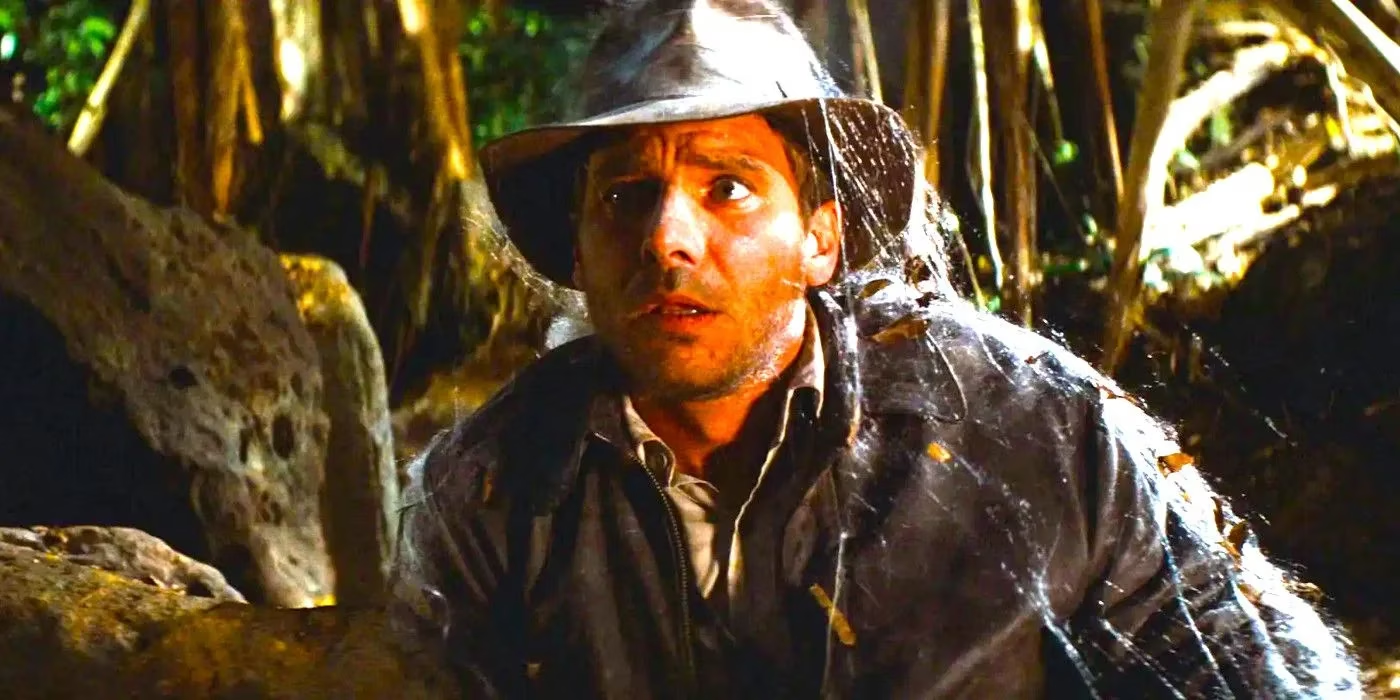
It's not bad; it's just a different language of filmmaking. We're so used to seamless digital worlds now that these analog marvels feel like watching a masterful stage play. You appreciate the craft, the sheer physical ingenuity of making a giant foam boulder roll, but you're also acutely aware that you're watching a constructed effect. It's a bittersweet reminder of how far the tech has come, and maybe what we've lost in pure tactile filmmaking magic.
2. 💥 The Violence is… Unapologetically Raw
Modern action movies, even the brutal ones, often have a certain choreographic slickness. Raiders doesn't bother with that. The violence is sudden, messy, and visceral. A guy gets chopped up by a plane propeller? We see it. Faces melt? You bet. The fight scenes are brawls, not ballets. For a viewer in 2026, raised on a diet of John Wick's precision and Marvel's largely bloodless combat, it's a stark, almost shocking contrast.
This isn't a critique of its effectiveness—the intensity absolutely serves the pulpy, serial-adventure tone. But it does highlight how audience sensitivity and the "language" of screen violence have evolved. Back then, it was thrilling escapism. Now, it makes you pause and think, "Whoa, they just went there." It's a testament to the film's uncompromising vision for its era. 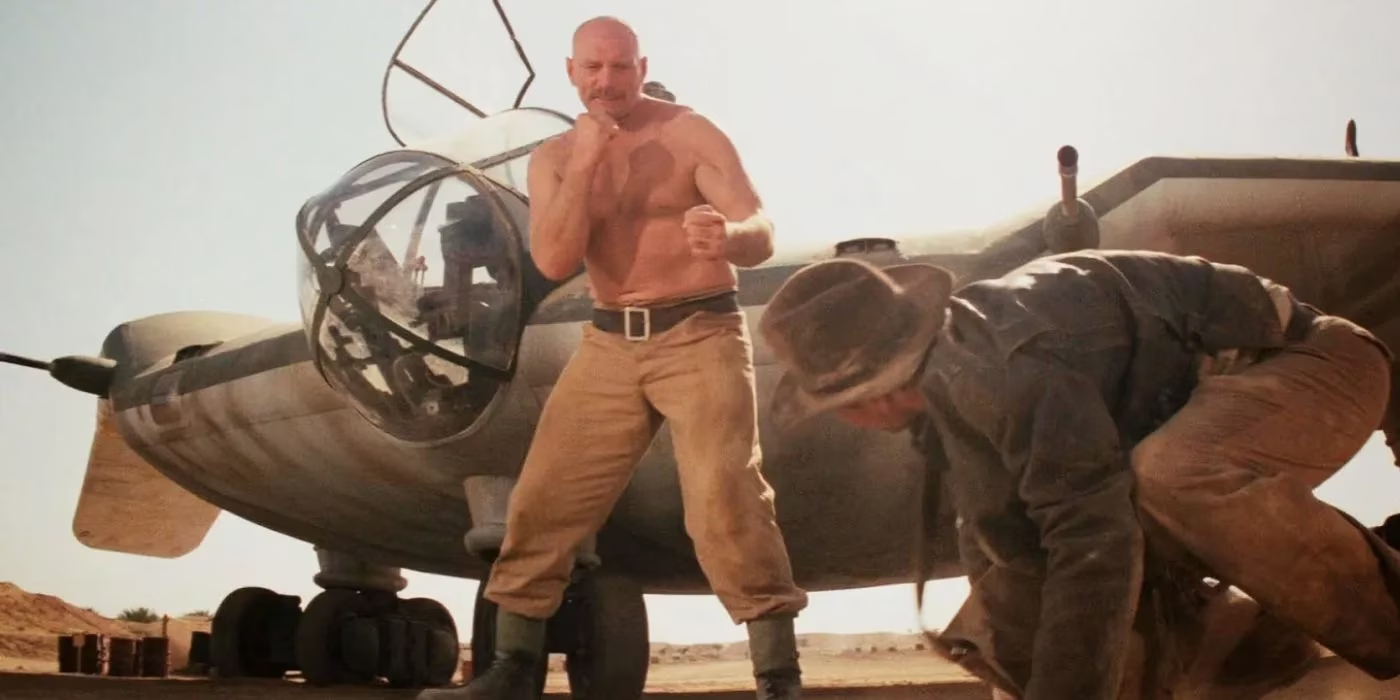
3. 🔍 "Dr. Jones, Your Methods are… Questionable"
Indy is the world's coolest archaeologist, but let's be real: he's a terrible one by modern standards! His entire modus operandi is basically looting. He grabs the golden idol, triggers a trap, and runs, leaving a historical site in ruins. Today, archaeology is about meticulous preservation, context, and understanding, not snatching shiny objects for museums. Rewatching in 2026, every time he manhandles an artifact, I internally scream about proper documentation and site integrity!
The film takes massive creative liberties with history and cultures, mashing them together for a fun story. And you know what? That's okay for an adventure romp. But it does create a weird dissonance now, where we're more aware of the real-world harm of colonialist "treasure hunting" narratives. It forces you to mentally separate the fantasy Indy from the very real, respectful practice of archaeology. 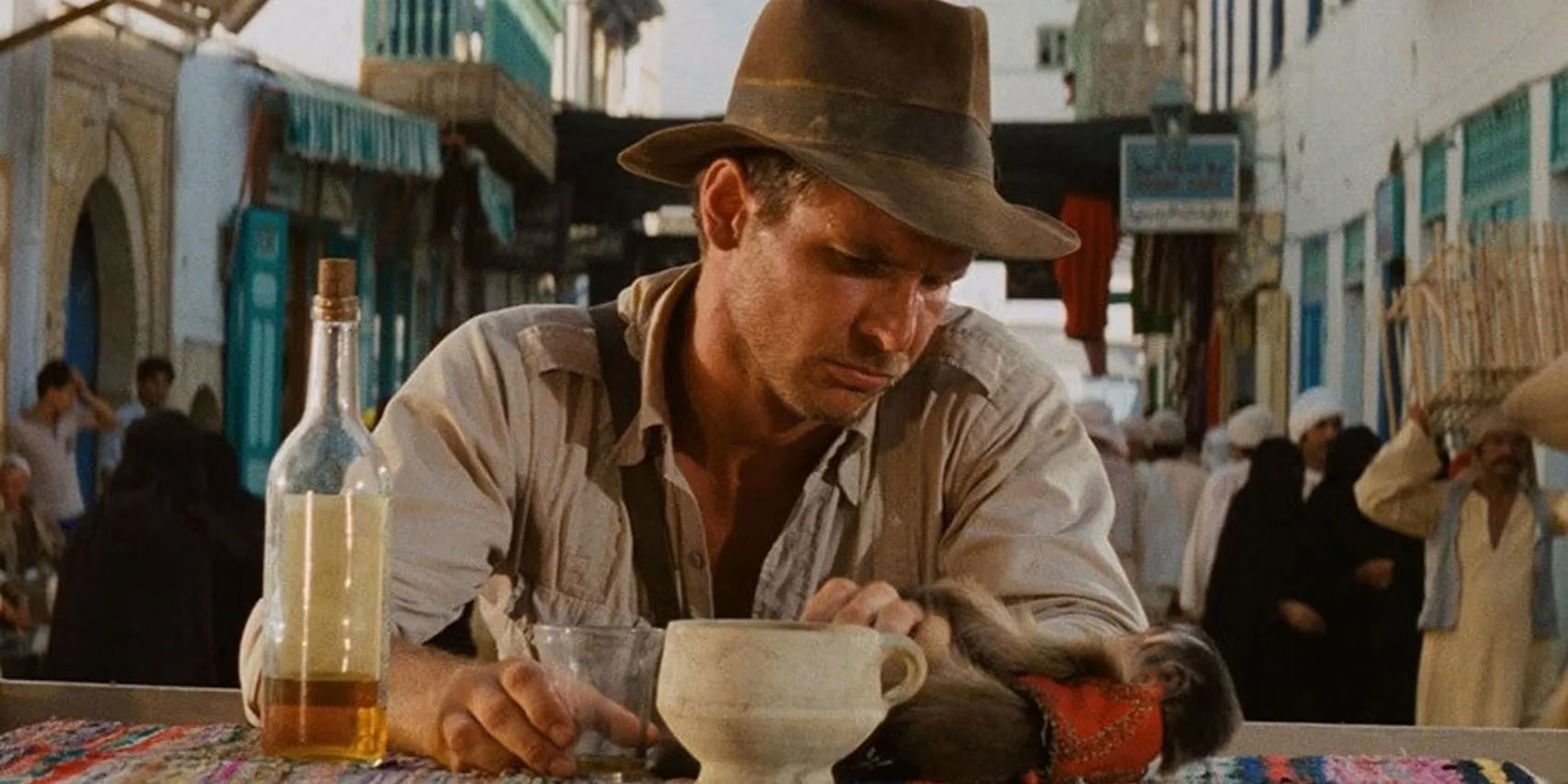
4. ⏳ The Pacing: A Deliberate Savoring
Remember when movies took time to breathe? Raiders does. Compared to the non-stop, sensory-overload pace of a typical 2026 blockbuster (looking at you, every franchise sequel), Raiders feels almost leisurely. It builds tension. It lets scenes play out. The famous truck chase is a masterclass in sustained action, but it's not edited into a frenetic, two-second-per-shot migraine.
For some modern viewers used to instant gratification, this might feel slow. But honestly? I found it refreshing. It trusts the audience to be patient, to soak in the atmosphere of Cairo's streets or the eerie stillness of the Well of Souls. It's a pacing style that's become a rare artifact itself.
5. 🦸♂️ The Leap of Faith is a Canyon Jump
We all accept a certain level of movie magic, but Raiders asks for a lot. Indy surviving a submarine ride across the Mediterranean by… hanging on the outside? The entire sequence with the flying wing? As a kid, I never questioned it. As an adult in 2026, my brain constantly pipes up with, "Wait, the physics of that don't…" and "Wouldn't he have hypothermia?"
Modern stunts, even the impossible ones, are often sold with such seamless CGI that they feel plausible within the movie's world. Raiders' stunts are gloriously, obviously stunts. You see the wires, you feel the practical-ness of it. It requires a conscious, willing surrender to the pulp serial logic of the 1930s/1980s hybrid universe. It's charming, but it definitely doesn't play by today's "grounded superhero" rules. 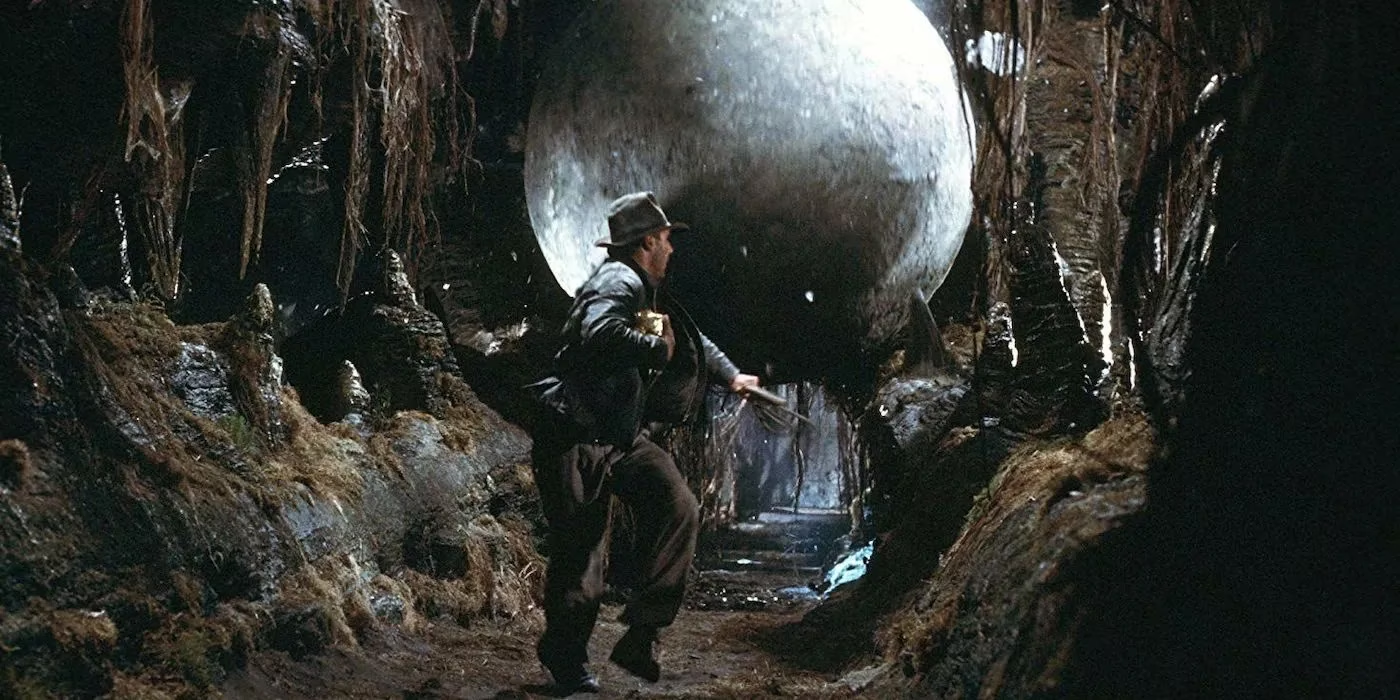
6. 🐍 Animal Welfare: A Squeamish Moment
This one hit hard. The snake pit scene is iconic for a reason—it's terrifying! But in 2026, with our heightened awareness of animal ethics in filmmaking, it's uncomfortable to watch knowing real snakes were used extensively. Then there's the scene in Cairo where a horse-drawn carriage crashes, and the horse takes a very nasty, very real-looking spill.
The American Humane Association "No Animals Were Harmed" disclaimer wasn't the standard then that it is today. Watching now, these moments are tinged with concern. It's a clear sign of how industry practices and audience expectations have (thankfully) evolved. We want our peril fictional, not at the potential expense of animal actors. 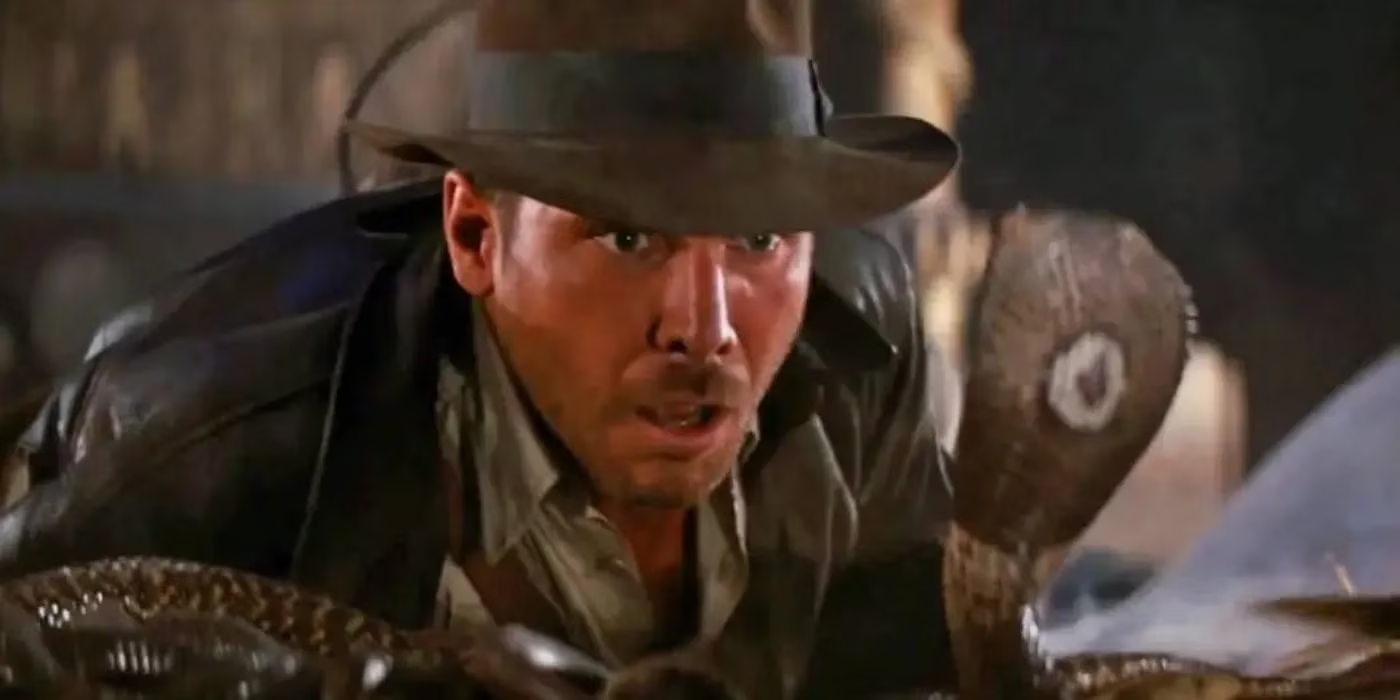
7. 🌍 Diversity & Representation: A Product of Its Time (And Not in a Good Way)
Okay, let's talk about the elephant in the room. Looking at the main cast through a 2026 lens is… stark. The heroes are almost exclusively white. The native Hovitos tribe are portrayed as primitive, threatening caricatures—pure "savage" stereotypes. And then there's Sallah, the beloved Egyptian digger, played wonderfully by… Welsh actor John Rhys-Davies in brownface. Yikes.
Furthermore, the Middle Eastern and Nepalese characters are largely either sinister villains, comic relief, or anonymous crowds. The film reflects a very 1980s (and frankly, colonial) viewpoint where the exotic "other" is a backdrop for the white hero's adventure. By today's standards, which rightfully demand authentic representation and cultural sensitivity, these aspects haven't just aged poorly—they've fossilized. It's impossible to ignore and certainly impacts the viewing experience. 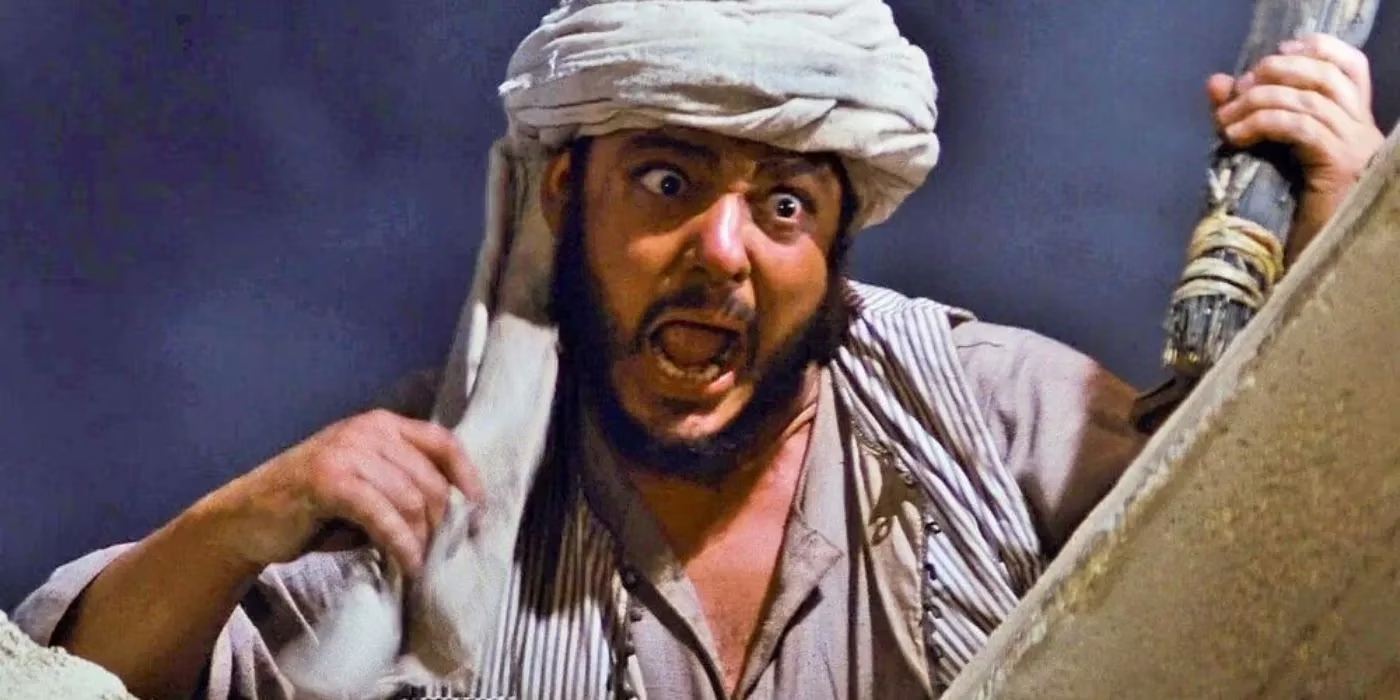
8. 👩🦰 Gender Roles: Marion Ravenwood and the Damsel Dilemma
Marion is fantastic—tough, resourceful, and can drink any man under the table. She's a highlight! But… she's also the only significant woman in the entire film. And her arc, for all her spunk, ultimately revolves around being kidnapped, threatened, and saved by Indy. She's the ultimate "feisty damsel in distress."
In 2026, after decades of complex female leads, action heroes, and villains, Marion feels like a first draft of a great character. We get glimpses of her potential (owning a bar, speaking multiple languages, holding her own in a fight), but the narrative constantly puts her in peril to motivate Indy. Where are the other women archaeologists? Engineers? Pilots? The world of Raiders is overwhelmingly male, which feels limiting and dated now. We want—and get—so much more for female characters today. 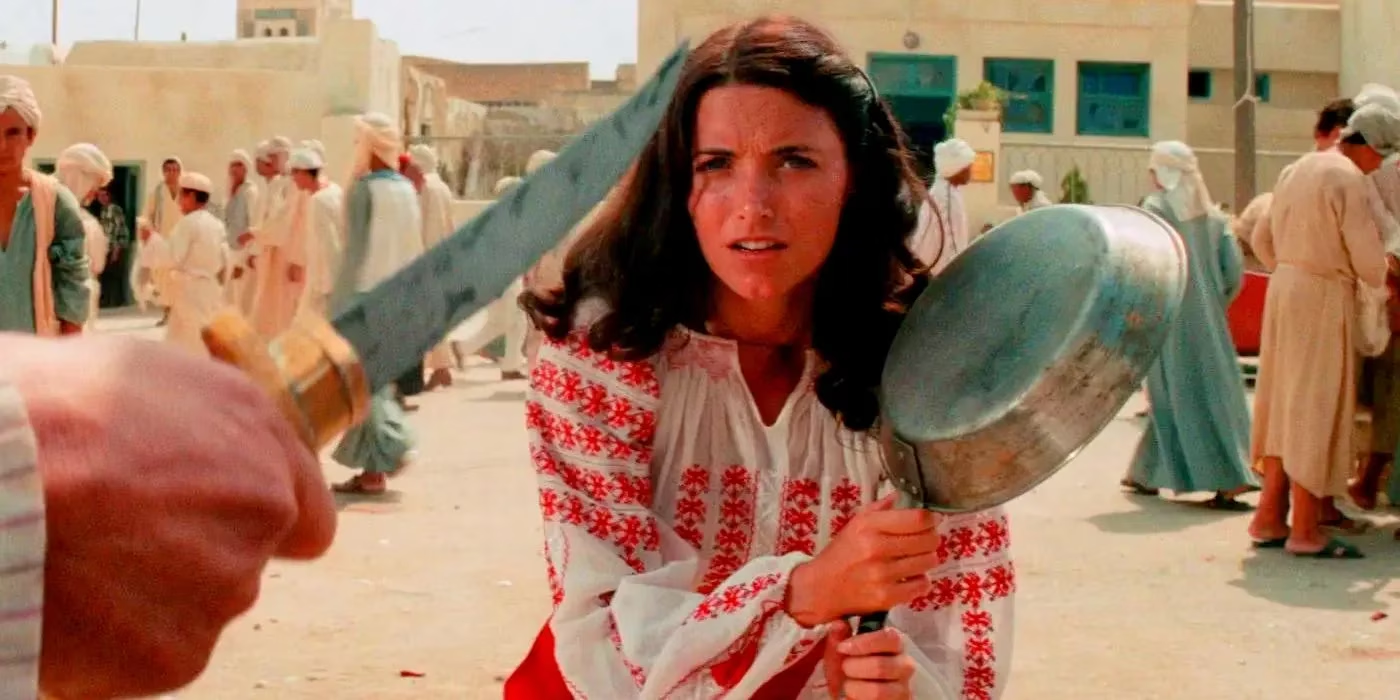
Final Verdict: A Complicated Legacy
So, did I still enjoy it? Absolutely. The set pieces are timeless, the chemistry is electric, and John Williams' score is a direct injection of adrenaline. It's a masterclass in pure, thrilling storytelling.
But the rewatch in 2026 is no longer a simple nostalgia trip. It's an archaeological dig into our own cultural past. You see the groundbreaking achievements and the entrenched limitations of its time. The film is a mirror, reflecting not just 1936, but 1981. And comparing that reflection to 2026 reveals how much our perspectives on violence, representation, science, and ethics have shifted.
Raiders of the Lost Ark is undeniably a classic. But a classic, like any artifact, needs to be examined from all angles, with context. It's okay to love something and still critique its flaws. In fact, that might be the most respectful thing we can do—appreciate its place in history while acknowledging how far we've come, and how far we still have to go. Now, if you'll excuse me, I need to go watch something where the archaeologist fills out proper permitting paperwork… just kidding, nobody wants to see that movie.