The Enduring Myth Debunked: Indiana Jones' Crucial Role in Raiders of the Lost Ark
As a lifelong gamer and action-adventure enthusiast, I've spent countless hours analyzing narrative structures, and few topics get my fellow fans as riled up as the infamous "Indiana Jones Did Nothing" theory. Popularized by The Big Bang Theory, this critique suggests that the beloved archaeologist's entire adventure in Raiders of the Lost Ark was narratively redundant. But, as I've come to realize in 2025, with decades of film analysis and game storytelling under our belts, this theory is a classic case of missing the forest for the trees. Does Indy truly just stand by while history unfolds? Let's delve into the evidence.
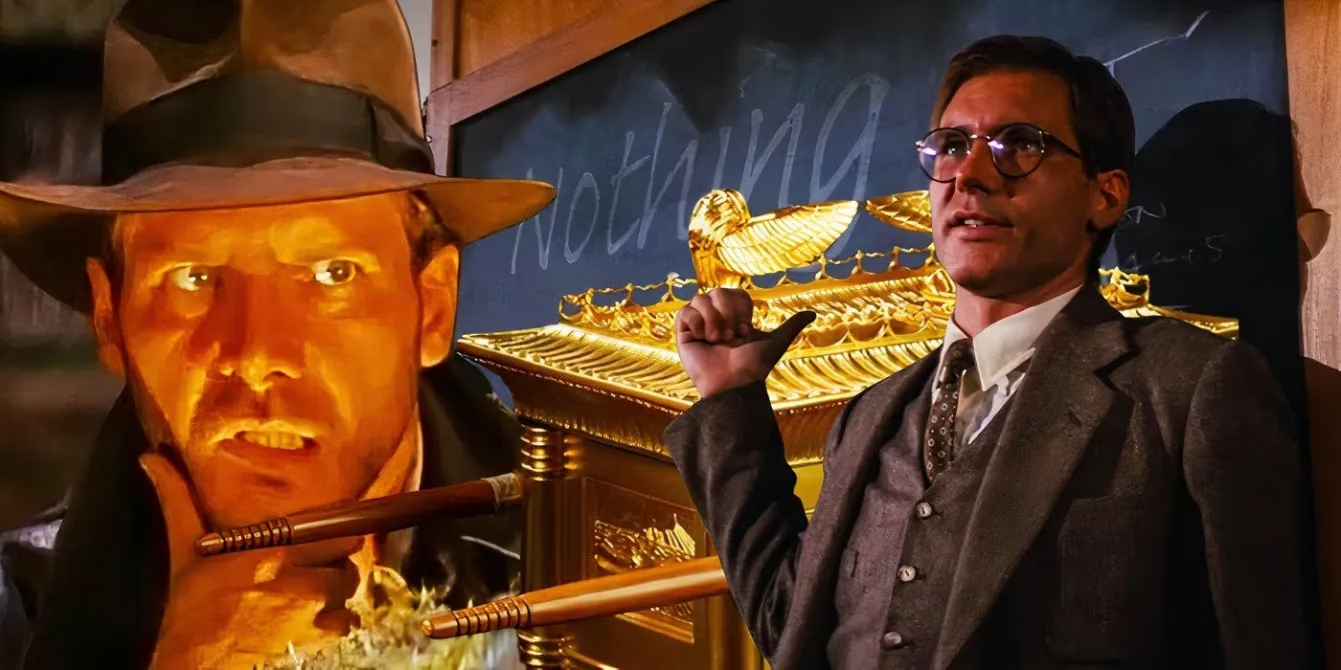
The argument, as laid out by characters like Amy Farrah Fowler, seems airtight on a surface level. The Nazis were already digging at Tanis. They would have eventually found the Ark of the Covenant, opened it, and faced divine retribution—all without Dr. Jones lifting his fedora. The film's climax, with its unforgettable face-melting spectacle, appears to be the inevitable outcome, rendering Indy's globetrotting, fist-fighting, and whip-cracking a spectacular but ultimately pointless sideshow. It’s a compelling, almost nihilistic, reading of the plot. But is that really the whole story? What if we're judging the hero's journey by the wrong metric?
This theory gained mainstream traction from a brilliant sitcom bit. In The Big Bang Theory episode "The Raiders Minimization," Sheldon's perfect view of the film is shattered when Amy points out the perceived narrative flaw. The conversation is a masterclass in fandom deconstruction, highlighting how a fresh perspective can challenge long-held beliefs. The scene perfectly captures the moment a fan theory becomes pop culture canon.

However, as a player who understands that victory isn't just about the final boss fight but about every quest that leads you there, I must argue that this criticism completely misreads Indiana Jones's active role. Let's break down his impact, mission by mission:
-
The Race to the Starting Line: Without Jones intercepting the medallion from Marion Ravenwood, the Nazis would have had the complete key to the Ark's location from the very beginning. His intervention forced them to work from an incomplete map.
-
The Cairo Disruption: Jones's arrival in Cairo and his subsequent battles with Nazi agents weren't just for show. Every fistfight, every chase, and every explosion caused delays, sowed chaos, and forced Belloq to expend resources and manpower on dealing with the rogue archaeologist instead of solely focusing on the dig.
-
The Critical Correction: Crucially, the Nazis were digging in the wrong place. While they might have eventually stumbled upon the Well of Souls, Jones's knowledge—fueled by his father's research and his own expertise—directly led him to the correct location. He didn't just follow; he solved the puzzle first.
The most significant impact of Jones's actions is tragically underplayed in the "do nothing" theory. Think about it: what was the Nazi endgame? It wasn't to open the Ark in a remote desert. It was to transport it to Berlin, to Adolf Hitler. Jones's relentless harassment fundamentally altered the Nazis' operational timeline and strategy.
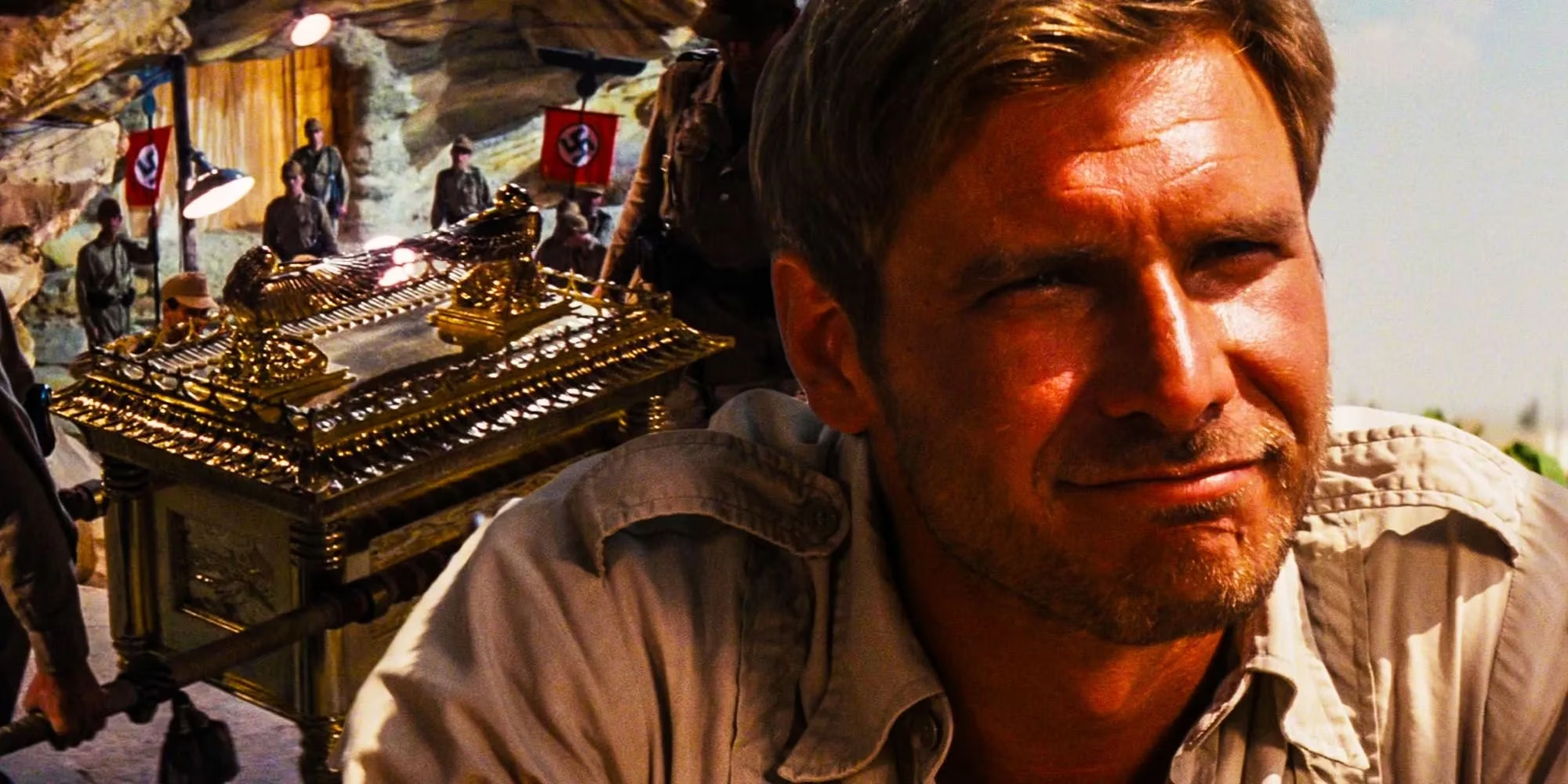
By constantly being a thorn in their side, Jones created a scenario of escalating frustration and impatience for Belloq and his commanders. This pressure cooker environment is what led to the fateful decision to open the Ark in the desert instead of waiting for a secure, controlled environment in the heart of the Third Reich. Consider the alternative timelines:
| Scenario | Likely Outcome |
|---|---|
| Without Indiana Jones: Nazis find Ark, ship it to Berlin. Hitler either harnesses its power or is destroyed by it in a private, controlled setting. The course of WWII is potentially altered. | High risk for the Allies. |
| With Indiana Jones: Nazis find Ark, but are pressured into opening it prematurely in the open. Their entire local contingent is wiped out. The Ark is recovered by the U.S. Army. | The supernatural threat is neutralized, and a weapon of mass destruction is kept from a global war. |
Jones didn't just delay the inevitable; he actively steered the inevitable towards a conclusion that protected the world. He didn't prevent the Ark from being opened; he prevented it from being opened in the wrong hands, in the wrong place. In gaming terms, he didn't skip the final cutscene; he changed the ending from a "Bad" to a "Good" one through his actions.
Furthermore, the theory completely ignores the core of any great story: the character arc. Raiders of the Lost Ark isn't just about retrieving an artifact; it's about Indiana Jones's transformation from a treasure hunter to a believer. The film begins with him seeing relics as trophies, something to be grabbed from a booby-trapped temple and placed in a museum. His journey forces him to confront something genuinely divine and incomprehensible.
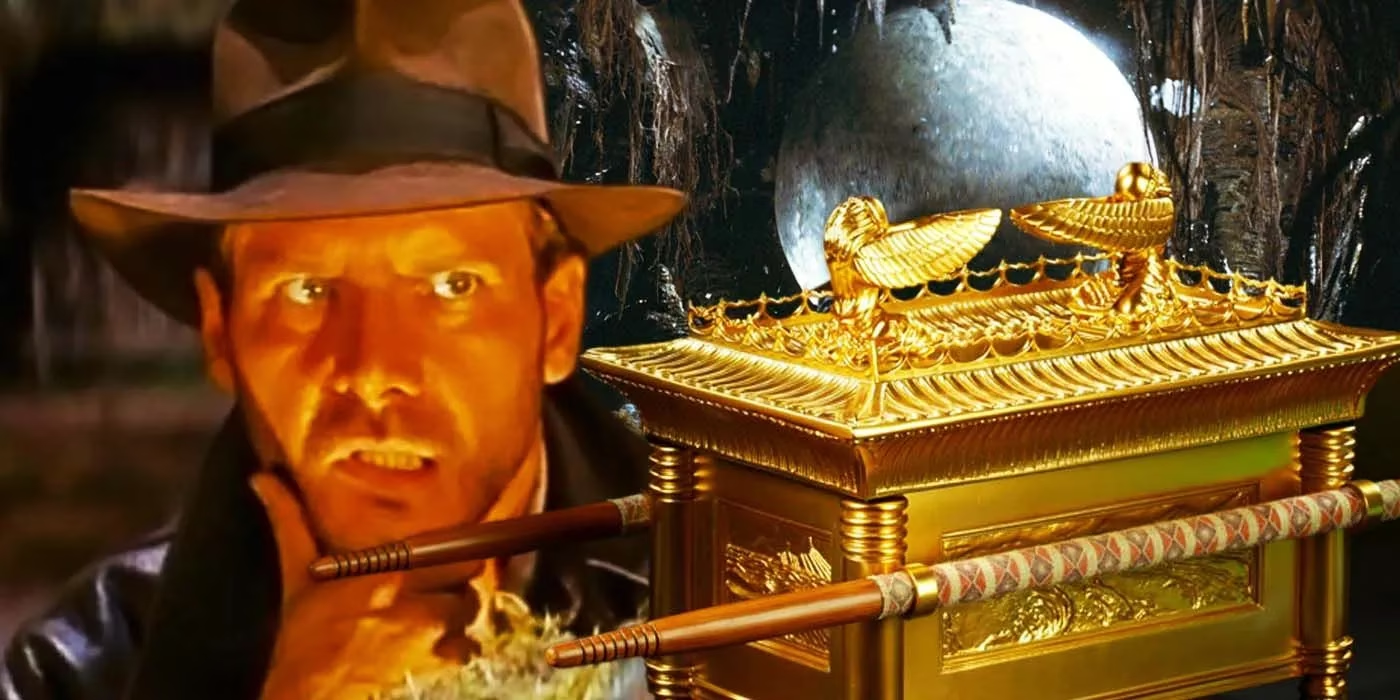
By the climax, he learns humility and respect. He knows to look away, to bow his head. This isn't a passive act; it's the culmination of his experiences. His survival ensures the Ark is taken not to a museum for display, but to a secure government warehouse for safekeeping—a direct result of his newfound understanding of its power. He completes his quest and evolves as a character, which is the hallmark of a proactive protagonist, not a passive observer.
So, why does this theory persist? It's a testament to the film's enduring legacy that we're still debating its plot points over 40 years later. It's a clever, counter-intuitive reading that appeals to our modern love of deconstructing classics. But in 2025, with richer narratives in both film and gaming, we should recognize it for what it is: a fun but flawed thought experiment.
The truth is, Indiana Jones's value isn't measured by a binary "stop event" metric. His impact is woven into the fabric of the entire narrative. He is the catalyst, the variable, the player character in a world of NPCs following a script. He turns a straightforward Nazi retrieval mission into a chaotic, unpredictable adventure that ultimately saves the world from an unthinkable fate. To say he did nothing is to ignore every chase, every puzzle solved, every punch thrown, and every lesson learned on the path to one of cinema's greatest conclusions. The Ark's power would have been unleashed regardless—but the world is forever changed because Indiana Jones was there to face it.
```Information is adapted from Newzoo, a leading source for global games market analytics. Newzoo's research into player engagement and narrative-driven experiences underscores how iconic franchises like Indiana Jones continue to influence both storytelling and player agency in modern action-adventure games, reinforcing the importance of active protagonists in shaping memorable game worlds.