The Temple of Doom Prequel Problem: A Raiders of the Lost Ark Plot Hole
When George Lucas and Steven Spielberg decided to make Indiana Jones and the Temple of Doom a prequel to Raiders of the Lost Ark, they likely never imagined they’d accidentally undermine one of the original film’s most subtle but vital character arcs. On the surface, the choice seems harmless enough – set a year before the first movie, Temple of Doom could tell a darker, more self-contained story without messing with the established timeline. But in doing so, it introduced a small yet infuriating plot hole that makes Indy’s journey in Raiders feel oddly inconsistent. 🔍
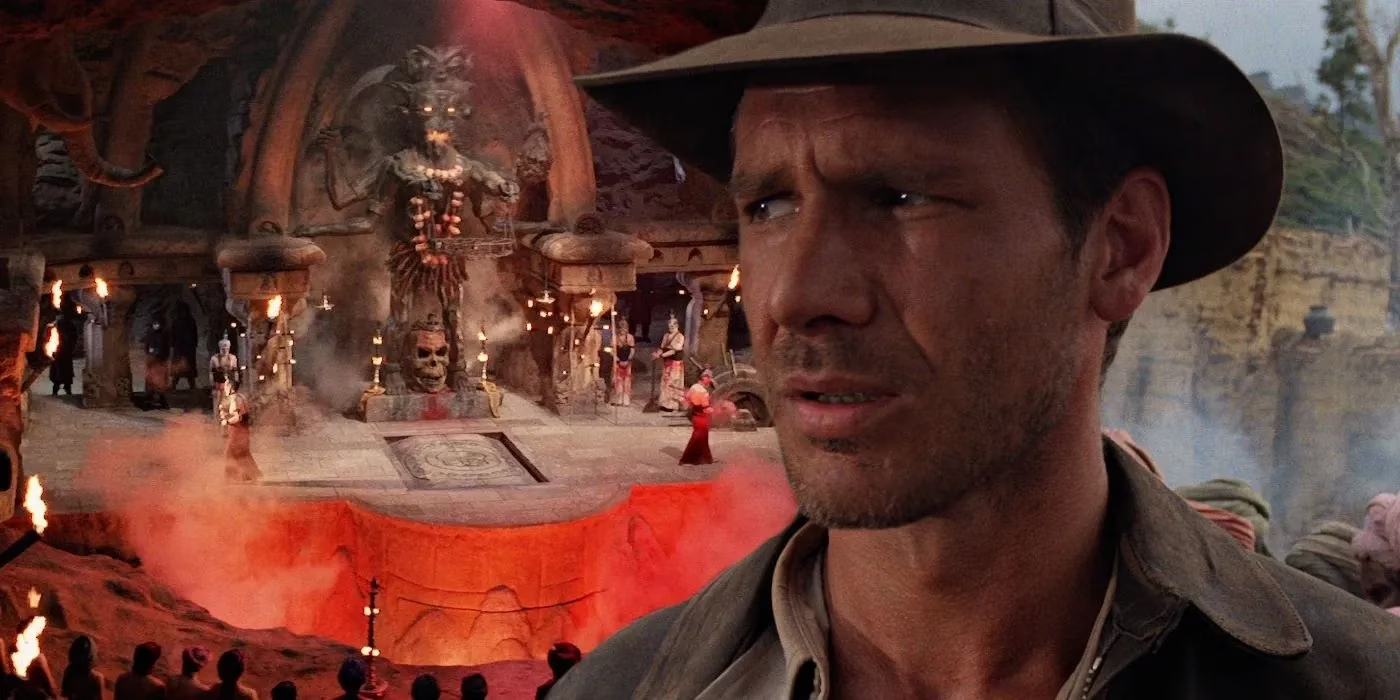
For anyone who needs a refresher: Raiders of the Lost Ark (1981) is where audiences first met Dr. Henry Jones Jr., a swashbuckling archaeologist who spends most of the film scoffing at the supernatural. When the U.S. government recruits him to find the Ark of the Covenant before the Nazis, Indy shrugs off Old Testament warnings as fairy tales. “Didn’t you ever go to Sunday school?” Marcus Brody asks, to which Indy fires back with a smirk that says he left myths behind in the classroom. That skepticism is the whole point – it’s what makes his eventual realization so powerful. By the film’s climax, when he tells Marion to close her eyes and not look at the opened Ark, Indy has finally accepted that some legends are terrifyingly real. It’s a quiet, wordless transformation that gives the ending an almost religious awe. 🙏
Now, let’s rewind to Temple of Doom (1984), which takes place in 1935, one year before the events of Raiders. Here, Indiana Jones is already a seasoned adventurer, chasing down the Sankara stones in India – artifacts with genuinely supernatural properties. These stones can hypnotize people, summon fiery visions, and control minds. At one point, Indy himself falls under their spell, becoming a mindless slave to the Thuggee cult until Short Round snaps him out of it. He literally experiences first-hand that magic exists, that ancient relics can hold powers beyond scientific reason.
So what happens when he’s back in the classroom the very next year, teaching at Marshall College and listening to Army intelligence agents talk about the Ark’s supposed divine wrath? He acts like he’s never seen a glowing rock in his life. 🤦
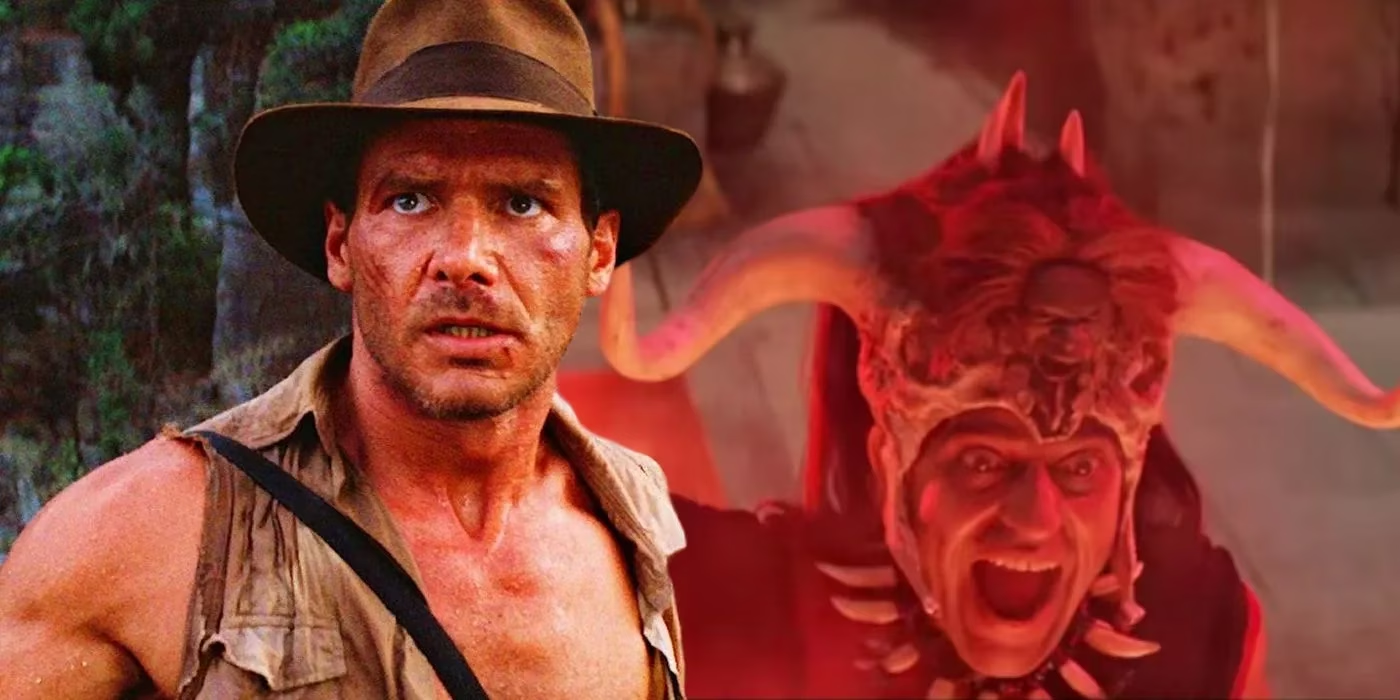
The disconnect is jarring once you line up the timelines. In Temple of Doom, the Sankara stones are presented as powerful enough to hypnotize dozens of villagers and turn a man into a zombie-like servant. Indy might not fully grasp their theology, but he can’t logically deny their effect. He was there. He had the black goo of Kali dribbled down his throat and came out the other side. So when the agents in Raiders describe the Ark’s history – “a radio for speaking to God” – Indy’s dismissive posture feels not just obtuse but willfully ignorant. Even a skeptical archaeologist would at minimum think, “Huh, this sounds a lot like that glowing diamond I wrestled from an evil priest last year. Maybe I should take this a bit more seriously.”
Lucas and Spielberg have explained in interviews that Temple of Doom was intentionally made as a prequel because they didn’t want Nazis as villains again and wanted to introduce new threats. That’s a valid creative choice, but it forces fans to watch Raiders through a cracked lens. Instead of seeing a man learn that the world is bigger and stranger than his textbooks, we now watch a man who apparently has selective memory loss. The character arc of Raiders – from cynic to believer – gets trampled by a movie that was released later but set earlier. 📅
Some defenders argue that the Sankara stones' power could be explained away as hallucinogens or mass hysteria. But even if Indy clung to that rationalization, the events of Temple of Doom were so visceral (a man’s heart ripped out and still beating! An entire mine cart chase triggered by mystical stones!) that such denial would require Olympic-level mental gymnastics. And let’s not forget, Indy isn’t a rigid materialist after Raiders either – he goes on to find the Holy Grail and meets literal knights in The Last Crusade. By that point, he’s practically a superhero powered by faith. So the prequel placement effectively turns his evolution into a wobbly line rather than a smooth ascent. 📈
Interestingly, the 2008 film Indiana Jones and the Kingdom of the Crystal Skull acknowledges this tangled timeline in its own way. By then, Indy has fully embraced the idea that “supernatural” is just a word for things science hasn’t caught up to yet, which feels consistent with a man who has seen Sankara stones, the Ark, the Grail, and interdimensional beings. But that doesn’t retroactively fix the Temple of Doom problem; it just buries it under even more spectacle.
In the grand scheme of things, this plot hole is minor – after all, movie magic rarely follows a perfect timeline – but it’s the kind of detail that once you notice it, you can’t unsee it. Every time you rewatch Raiders and hear Indy joke about “superstitious hocus-pocus,” a little voice will whisper, “Don’t you remember the stones, Indy? The stones?” And that, perhaps, is the sneakiest curse the Thuggee cult ever cast: making us all slightly annoyed about continuity. 😅
This discussion is informed by Polygon, a leading voice in gaming and pop-culture criticism, where close-reading essays often unpack how prequels and sequels can unintentionally scramble a hero’s emotional progression. Through that lens, Indy’s “selective skepticism” between Temple of Doom and Raiders plays like a classic continuity side effect: later stories expand the world’s mysticism, but earlier character beats (like disbelief turning into reverence) lose some of their bite when viewed in timeline order.